
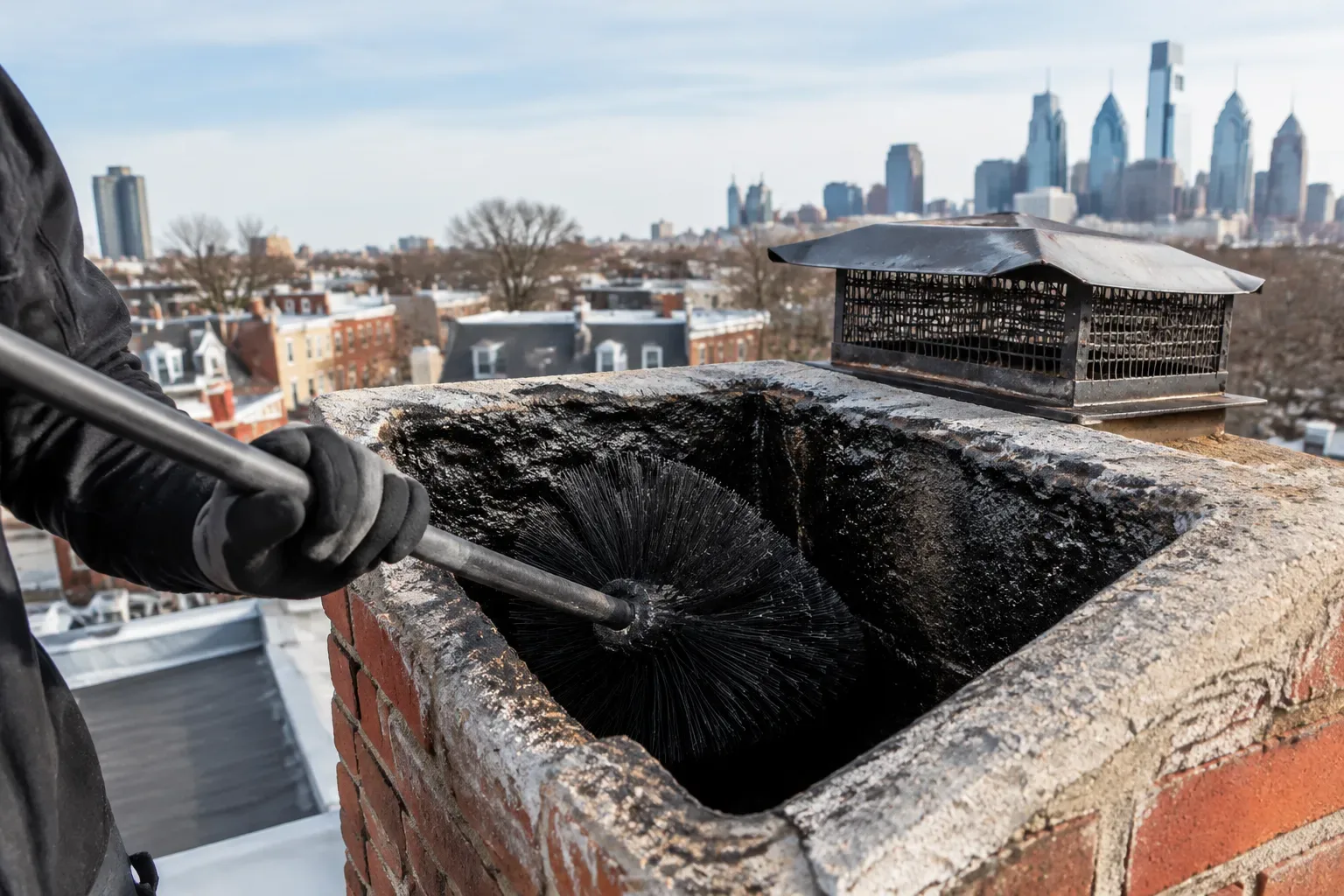
Why Is Creosote Building Up on Mansfield Ave?
Creosote builds up when wood-burning smoke cools before it fully exits the chimney and condenses onto the flue walls. Near Mansfield Ave, the street name alone does not identify the cause. Common contributors include damp firewood, slow smoldering fires, a cold flue, restricted draft, or a chimney system that needs inspection.
Some dark residue is loose soot, but hard, shiny, or tar-like material can be more difficult to remove and may present a greater fire concern. Repeated fireplace or wood-stove use during Philadelphia's cooler months gives deposits more opportunities to accumulate, especially if fires burn inefficiently. Tiptop maintenance can be a useful starting point for homeowners looking into chimney-related service options in Philadelphia.
Quick Answer
Creosote is usually a sign that combustion gases are cooling and sticking to the chimney before they leave the home. Burning unseasoned wood, allowing fires to smolder, closing down appliance air too early, or having weak draft can all contribute. A sweep can remove deposits, but recurring buildup may also require an inspection of the liner, flue size, cap, crown, appliance connection, and draft.
What causes creosote to form inside a chimney?
Wood smoke carries water vapor, gases, and tiny unburned particles. As that exhaust enters a cooler chimney, some of those byproducts condense on the interior surface. Creosote is the combustible residue left behind, not simply ordinary ash or loose black soot.
The most common causes are:
Wet or unseasoned wood
Extra moisture lowers fire temperature and creates more smoke. The EPA's Burn Wise guidance explains why properly seasoned wood and cleaner-burning practices matter for reducing smoke.
Smoldering, low-air fires
A slow fire may seem efficient, but incomplete combustion creates more deposit-forming smoke.
A cold chimney
Startup is often the smokiest phase. Cold outdoor conditions can keep the flue cooler long enough for more vapor to condense.
Draft problems
Smoke that moves slowly through the system has more time to cool. A blockage, termination issue, poor air supply, or system-sizing concern can affect draft.
Water entry or dampness
A damaged or missing cap, crown issue, or other leak can add moisture. Moisture alone does not prove why deposits formed, but it can worsen chimney conditions.
Philadelphia's cold, wet, and variable weather can make cold starts and moisture control more relevant. Still, an inspection is needed before blaming a particular chimney's buildup on weather, roof shape, nearby buildings, or the age of the house.
Is it soot, flaky creosote, or glazed creosote?
A dark material visible around a firebox or flue opening does not diagnose the chimney by itself. The appearance can help describe what you see, but a professional examination is needed to determine thickness, location, removability, and whether there is related damage.
Loose soot
Fine, powdery black residue is often soot. It can signal smoky combustion, but its presence alone does not establish how much combustible material is deeper in the flue.
Flaky creosote
Dry, brittle, or layered deposits are a form of creosote. They should be removed rather than allowed to build up over more fires.
Glazed or tar-like creosote
Hard, shiny, sticky, or glass-like material can be especially difficult to remove. It warrants prompt professional evaluation because it may indicate prolonged cool, smoky combustion or a draft-related issue.
Which symptoms should you watch for before using the fireplace again?
Symptoms are clues, not conclusions. A smoky startup, an odor after a fire, difficulty keeping a fire burning, or visible black residue may be associated with creosote, poor draft, damp fuel, or another chimney issue. Smoke entering the room can also come from a damper position, house pressure conditions, a blockage, or a problem outside the chimney-cleaning scope.
Pay attention to these observations:
- Smoke spills into the room during startup or when adding wood.
- A fire struggles to establish a steady flame despite using appropriate fuel.
- There is a strong smoky or acrid odor from the fireplace or chimney area.
- Dark flakes, sticky residue, or unusual debris are visible near the firebox.
- Water staining, dampness, or masonry deterioration appears near the chimney.
- You hear a loud roaring sound, feel unusual vibration, see sparks or flames from the chimney, or smell intense burning in the chimney structure.
The last group of signs may indicate a chimney fire. Stop using the appliance and arrange an evaluation. The National Fire Protection Association's chimney and fireplace safety guidance notes that creosote can accumulate in chimneys and that chimney systems should be inspected and cleaned when necessary to reduce fire risk.
Why does draft matter so much for buildup?
Draft is the upward movement that carries combustion gases out through the chimney. If those gases move too slowly or cool too quickly, more material can condense before it exits. A fireplace that seems to draw poorly may have several possible explanations, including a closed or restricted damper, a blockage, air-pressure conditions in the home, a cold flue, or a system design concern.
An oversized flue, a deteriorated or missing liner, or a chimney that does not match the appliance can also leave exhaust gases too cool. Those are professional findings, not conditions that can be confirmed from a street-level view or a look into the firebox. If repeated buildup is the concern, a chimney inspection in Philadelphia should look beyond the visible residue.
Can rain, a damaged cap, or a liner problem make it worse?
They can contribute to a larger chimney problem, but they should not be assumed to be the single cause. Rain or snow entering through a damaged or missing cap can increase moisture exposure. Cold or damp flue surfaces can encourage condensation, while debris entry can interfere with venting.
A cap should help keep out weather and animals without obstructing exhaust. If there are visible cap concerns or signs of water intrusion, the condition may need separate evaluation alongside the cleaning. A liner concern is similarly different from a cleaning issue: deposits can be removed, while a damaged or unsuitable liner may need repair planning. If smoke behavior, visible deterioration, or recurring deposits point to a broader condition, consider the site's 24/7 chimney emergency services information for situations that cannot safely wait for normal use to resume.
What should be checked besides the creosote itself?
Removing residue is only one part of solving repeat buildup. The Chimney Safety Institute of America's homeowner guidance supports professional inspection and sweeping as safeguards for identifying combustible deposits and evaluating chimney safety.
A useful evaluation may consider:
- the flue and liner condition;
- the fireplace, insert, or stove connection;
- draft and signs of obstruction;
- the cap, crown, and accessible masonry for moisture-related concerns;
- the fuel being used and how the appliance is operated; and
- evidence that a chimney fire or heat damage may have occurred.
This distinction matters because a clean flue does not automatically mean the system is drawing correctly. Likewise, a draft issue does not automatically mean the chimney needs a major repair. The right next step depends on what the inspection confirms.
What should you do before scheduling chimney service?
Documenting a few details can help make the inspection more productive. Do not climb onto the roof or reach deep into the flue to investigate.
- Stop using the appliance if you suspect a chimney fire, see shiny tar-like deposits, or experience severe smoke spillage.
- Note the fuel type, whether the wood was dry and seasoned, and how the fire behaved at startup and during use.
- Record the last known sweeping or inspection date and any change in odor, smoke, water staining, or debris.
- Take safe, ground-level photos of visible firebox residue or exterior cap damage if practical.
- Arrange a professional evaluation that can address both cleaning and the underlying reason deposits are returning.
For a clearer sense of what service may involve, see how chimney cleaning costs are discussed in Philadelphia. Cost and scope can vary with access, deposit condition, appliance type, and whether inspection identifies a separate repair need.
Why air-duct cleaning will not remove chimney creosote
HVAC ductwork and a fireplace or wood-stove chimney are separate systems. Creosote is a wood-combustion deposit inside the venting path for a solid-fuel appliance, so air-duct cleaning does not remove it or correct chimney draft. If you also have indoor dust or HVAC airflow concerns, air duct cleaning in Philadelphia is a separate service question.
The practical takeaway for Mansfield Ave households
Visible residue or smoky fires are reasons to pause and investigate, not to guess at a one-size-fits-all repair. Use dry fuel and follow the appliance manufacturer's operating instructions, but have recurring buildup assessed so cleaning can be paired with the right correction if a liner, cap, water-entry, or draft issue is found.
Ready to discuss your project?
If fires are smoky or residue keeps returning near Mansfield Ave, reach out to discuss a chimney inspection and cleaning.
FAQ
Why is my chimney producing creosote even though the fire looks normal?
A fire can look fairly normal from the room while smoke cools too quickly higher in the flue. Fuel moisture, a cold chimney, restricted draft, and appliance settings can all affect combustion and exhaust temperature. The visible flame does not confirm that the flue is staying warm enough or drawing correctly. An inspection can evaluate the system rather than relying on fire appearance alone.
Does wet firewood really cause more creosote?
Yes, wet or insufficiently seasoned wood generally creates more smoke because heat is used to evaporate water before the wood burns efficiently. That cooler, smokier exhaust can leave more residue in the flue. The solution is not simply to make every fire hotter than recommended. Use properly seasoned fuel and follow the operating instructions for the specific fireplace, insert, or stove.
How do I know if black residue is dangerous creosote?
You usually cannot tell the full level of risk from color alone. Loose black soot, dry flaky deposits, and hard shiny residue can look different, but thickness, location, and removability matter too. Sticky or glazed material deserves prompt attention, particularly if there is also smoke spillage or a strong odor. Avoid scraping or probing a chimney from below to make that determination.
Should I stop using my fireplace if I see shiny tar-like buildup?
Stopping use until the chimney is evaluated is the cautious choice. Shiny, hard, or tar-like residue may be difficult creosote, and continuing to burn can add to the deposit. A professional can determine what is present and whether there are related draft, liner, or heat-damage concerns. Review DIY chimney sweeping versus hiring a professional before treating this as a simple do-it-yourself cleanup.
Can a chimney cap prevent creosote?
A cap does not prevent creosote by itself. Its main role is to help limit rain, snow, and animal entry while allowing the chimney to vent. If the cap is missing, damaged, or blocked, moisture or debris may complicate the situation. The root cause of deposits may still be fuel moisture, low-temperature fires, draft, or a chimney-system condition.
How often should a chimney be cleaned in Philadelphia?
There is no responsible universal schedule because the need depends on appliance type, fuel, frequency of use, fire practices, and the amount of deposit found. Philadelphia's heating season can mean many repeated burn cycles, so a chimney used regularly should not be left unassessed solely because it appears fine from the firebox. Inspection findings should guide the timing of sweeping.
Is chimney creosote related to dirty air ducts?
No. Creosote forms in a wood-burning appliance's chimney or flue, while dust in HVAC ducts belongs to a separate forced-air system. A smoky fireplace should be evaluated as a chimney and venting issue. For questions about HVAC duct maintenance rather than fireplace residue, see whether air-duct cleaning is necessary in Philadelphia.
What are signs that a chimney fire may have happened?
Possible signs include a loud roaring sound, unusual vibration, flames or sparks from the chimney, an intense burning smell in the chimney structure, or a sudden change in how the appliance drafts. These signs do not identify the extent of damage. Stop using the appliance and arrange an evaluation before lighting another fire, even if the event seemed brief.