
How Do You Tell if a Chimney Cap Is Missing on W 68th Ave?
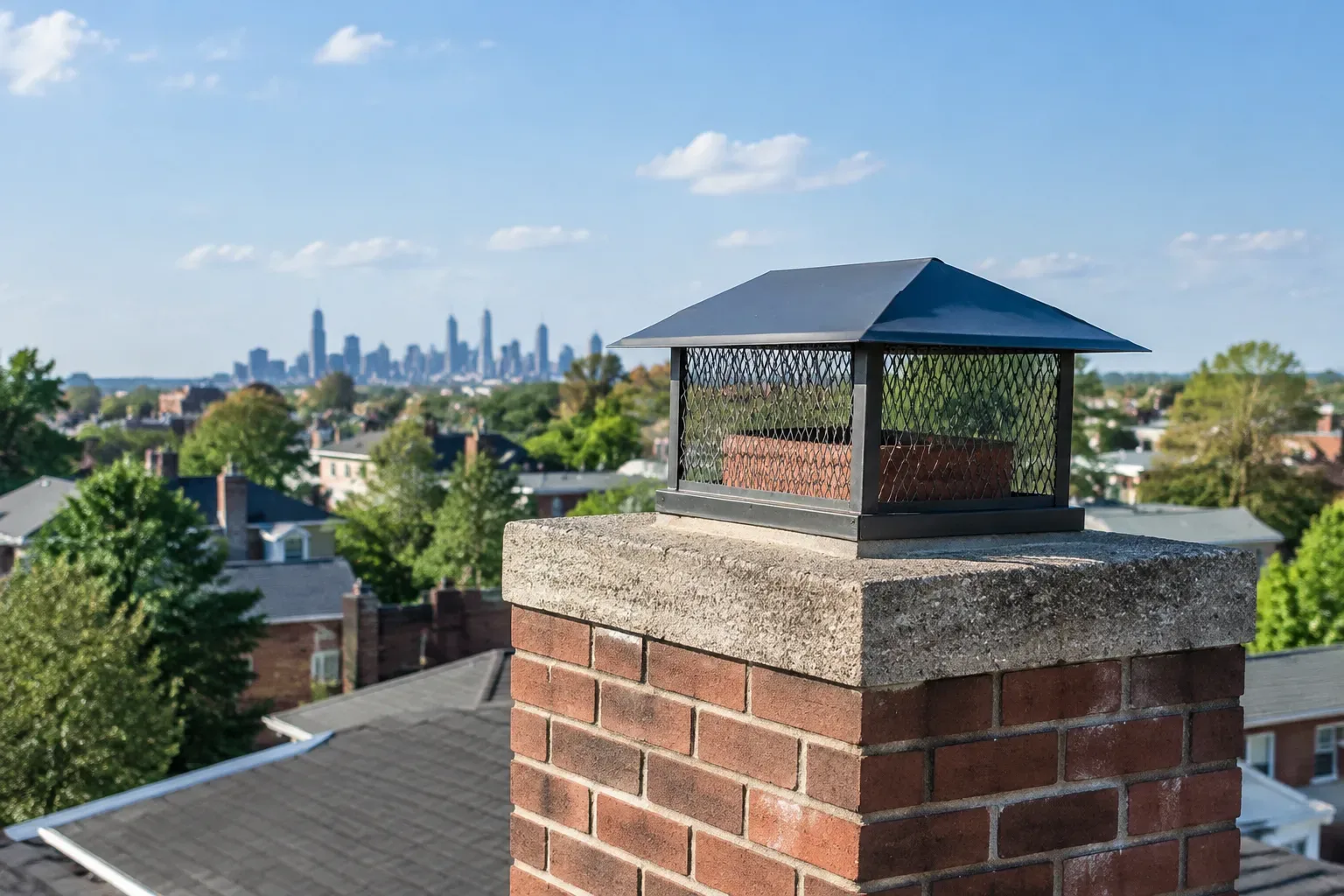
A missing chimney cap usually leaves the flue opening visibly exposed from a safe ground-level view. You may see an open clay tile or dark opening at the top of the stack, rather than a metal cover with a gap beneath it and protective mesh around the sides. Birds entering the chimney, nesting material, rain appearing in the firebox, or a loose metal piece near the roofline are also warning signs, but none proves the cap is gone without a closer inspection.
Do not climb onto the roof to check. A cap can be hidden by the viewing angle, parapet, roofline, or a larger multi-flue cover. If this refers to an address on W 68th Ave, confirm the intended city and address before assuming local conditions or arranging service.
Quick Answer
Look from the ground with binoculars only if you can remain safely on level ground. An intact cap generally appears as a metal or masonry cover above the flue, often with visible screening and a space for smoke to exit. If you can clearly see an uncovered flue tile, daylight through an open top, or a cap that is bent, detached, or missing its mesh, arrange a professional assessment instead of attempting a roof check.
The Chimney Safety Institute of America explains that chimney caps help keep rain, animals, and debris out. A missing cap can be a straightforward replacement issue, but an inspection may also find crown, flashing, masonry, or flue concerns that need separate attention.
What should be visible at the top of a capped chimney?
From a useful ground-level angle, a cap commonly looks like a flat or peaked metal top that extends beyond the flue opening. There is typically an air gap below the top so combustion gases can leave, and many caps include mesh around that gap to deter animal entry.
An exposed chimney may instead show an open clay flue tile, a dark rectangular opening, or the inside edge of an uncovered metal flue. Distance, shadows, roof pitch, and adjacent structures can make this difficult to judge. In Philadelphia, older masonry and tightly spaced attached homes can limit the view from the street or yard, so an uncertain view is not a reliable diagnosis.
Tiptop maintenance provides chimney-related information and services for Philadelphia readers who need help distinguishing a visible cap issue from a more complete chimney concern.
Is it a missing cap, a damaged cap, or a damaged crown?
People often use “chimney cover” for several different parts. They do different jobs, and replacing the wrong component will not solve the underlying problem.
Chimney cap
A weather and animal barrier installed above one flue or across multiple flues. It may be metal, include mesh, and have a visible air gap beneath its top.
Chimney crown
The sloped concrete or masonry surface at the top of a masonry chimney. Its job is to shed water away from the chimney structure, not to screen the flue opening.
Chase cover
A metal cover over a framed chimney enclosure, often seen on prefabricated chimney systems. It may support one or more termination caps.
Rain cap or termination cap
A general term for a vent or flue cover. It is not automatically suitable for every fireplace, furnace, or other vented appliance.
A cracked crown can allow water into the masonry even if the cap is present. Likewise, a cap can be loose, rusted, bent, or missing its mesh while still appearing to be in place. For visible deterioration at the chimney top, chimney cap repair in Philadelphia may be more appropriate than assuming the entire assembly is absent.
Which signs suggest the flue may be exposed?
These are observable symptoms, not final diagnoses:
- A clear view of an open flue tile or dark, uncovered opening at the chimney top.
- Birds, squirrels, raccoons, or repeated animal activity around the opening.
- Twigs, leaves, feathers, or nesting material appearing in the fireplace or cleanout area.
- Rainwater, dampness, or new debris inside the firebox after wet weather.
- A metal cap visible on the roof, ground, or nearby surface after wind or storm activity.
- A cover that appears crooked, lifted, badly rusted, or separated from its fasteners.
Animal activity can also point to a damaged screen or another opening, rather than a fully missing cap. Water near a fireplace may come from failed flashing, a cracked crown, damaged masonry, roof leaks, or another building issue outside a chimney specialist's scope. Only an inspection can sort out the source.
How can you check for a missing chimney cap without climbing?
A safe visual check is about gathering useful information, not confirming every detail from the roof.
- Stand on level ground where you have a clear view of the roofline. Do not use a ladder, lean out a window, or step onto a roof.
- Look from more than one safe angle. A parapet, ridge, or neighboring structure can hide a cap from one viewpoint.
- Take clear photos of the chimney top from each angle and note any visible open flue, loose metal, rust, or damaged screening.
- Check inside only from the fireplace or cleanout opening for debris, moisture, odors, or signs of animal activity. Do not reach into the flue.
- Stop using a connected fireplace or appliance if you notice an active nest, smoke problems, carbon-monoxide concerns, falling masonry, or water entering near the firebox. Seek appropriate professional or emergency help.
- Arrange a chimney inspection in Philadelphia if the cap cannot be clearly seen or any warning sign is present.
A professional finding should cover more than the visible cover: cap fit and attachment, mesh, crown condition, flashing, upper masonry, flue termination, and evidence of moisture or animals.
Why does an uncovered chimney need attention?
An open flue gives rain, leaves, nesting materials, and animals a direct route into the chimney. In an urban setting, flue-specific screening matters because birds, squirrels, raccoons, and their nesting debris can enter an uncapped opening.
Water is the other concern. Repeated wetting and freezing can worsen existing cracks, open mortar joints, and porous masonry near an uncovered chimney top. That does not mean every missing cap has already caused masonry damage, but it is a reason to have the crown, flashing, and upper brickwork checked at the same time.
If the inspection confirms that the cap is missing or incorrectly sized, chimney cap installation and replacement in Philadelphia is the appropriate next step. If it reveals a cracked or failing top surface instead, chimney crown repair in Philadelphia addresses a different problem.
When is a missing chimney cap an urgent concern?
Treat the situation as more than routine maintenance if there is active animal entry, a nest, water reaching the fireplace area, falling brick or metal, a strong smoke odor, or any concern about combustion gases. Stop using the affected appliance until the venting arrangement can be evaluated.
A cap problem alone may not be the whole emergency. Smoke backing up, carbon-monoxide alarms, or visibly unstable masonry can involve the appliance, flue, structure, or another system. For conditions that need prompt attention, review the available 24/7 chimney emergency service information and seek the appropriate help for the hazard.
What is the most common mistake after spotting an open flue?
The usual mistake is buying a universal cap and installing it without confirming the flue dimensions, number of flues, appliance type, draft needs, and termination requirements. A cap that is too small, poorly secured, or incompatible with the venting system can create another problem rather than solving the first one.
The practical takeaway is simple: document what you can see safely, then have the chimney top evaluated before selecting a replacement. If debris or nesting material is found inside, the cap issue and cleaning needs should be considered together. For cleaning-related planning, see how chimney cleaning costs are evaluated in Philadelphia.
Ready to discuss your project?
If you can see an open or damaged flue top near W 68th Ave, ask Tiptop maintenance to assess the cap, crown, and visible chimney condition safely.
FAQ
Can I tell from the ground if my chimney cap is missing?
Sometimes. A clear view of an open flue tile or dark opening without a cover is a strong reason to investigate, but it is not always conclusive. Caps may sit behind parapets, blend into the roofline, or be part of a multi-flue assembly that is hard to see. Take photos from several safe locations and have unclear conditions checked from the roof level.
What does a missing chimney cap look like?
It often looks like an uncovered clay tile, a dark rectangular or round opening, or an exposed metal flue termination. An intact cap usually has a top that projects over the opening and may have mesh around its sides. A chimney can look uncapped from one angle even when a cap is present, so avoid making a final call based on a distant single view.
Can rain come in through a chimney without a cap?
Yes. A cap helps reduce direct rain entry into the flue, though it is not the only water-management component. Rain near the fireplace can also result from flashing, crown, masonry, or roof problems. An inspection should identify the water path before any repair is chosen, especially if moisture has appeared after storms.
Can birds or squirrels get into a chimney with no cap?
They can. An open or poorly screened flue can allow birds, squirrels, raccoons, and nesting debris to enter. Do not attempt to remove an active animal or nest yourself, and do not operate a fireplace or connected appliance until the situation is assessed. Once the flue is safe to address, chimney cleaning in Philadelphia can help address debris concerns identified during evaluation.
Is a chimney crown the same thing as a chimney cap?
No. The crown is the sloped masonry or concrete surface at the top of the chimney, designed to direct water away from the structure. The cap sits above the flue opening and helps block rain, animals, and debris while allowing exhaust to exit. Either part can be damaged while the other remains intact.
Should I use my fireplace if the chimney cap is missing?
It is safer to pause use until the flue and appliance setup have been assessed, particularly if there is water, nesting material, animal activity, smoke trouble, or uncertainty about the venting path. Different fuel types and appliances have different termination requirements. A visible opening alone does not identify the correct replacement or confirm that the flue is otherwise safe to use.
Does a bent or rusty cap need replacement?
Not always, but it needs evaluation. Surface discoloration may be cosmetic, while a bent top, broken mesh, loose fasteners, sharp edges, or separation from the chimney can compromise protection. The deciding factors are the cap's stability, fit, screen condition, and compatibility with the flue, not appearance alone.
What information should I have ready for a chimney cap inspection?
Provide clear ground-level photos, the number of visible flues if known, notes about animal activity or water, the fuel type of any connected appliance, and whether the chimney serves a fireplace, furnace, or another system. Do not guess if you are unsure. Those details help a professional determine whether the concern is a cap, crown, flashing, cleaning, or venting issue.