
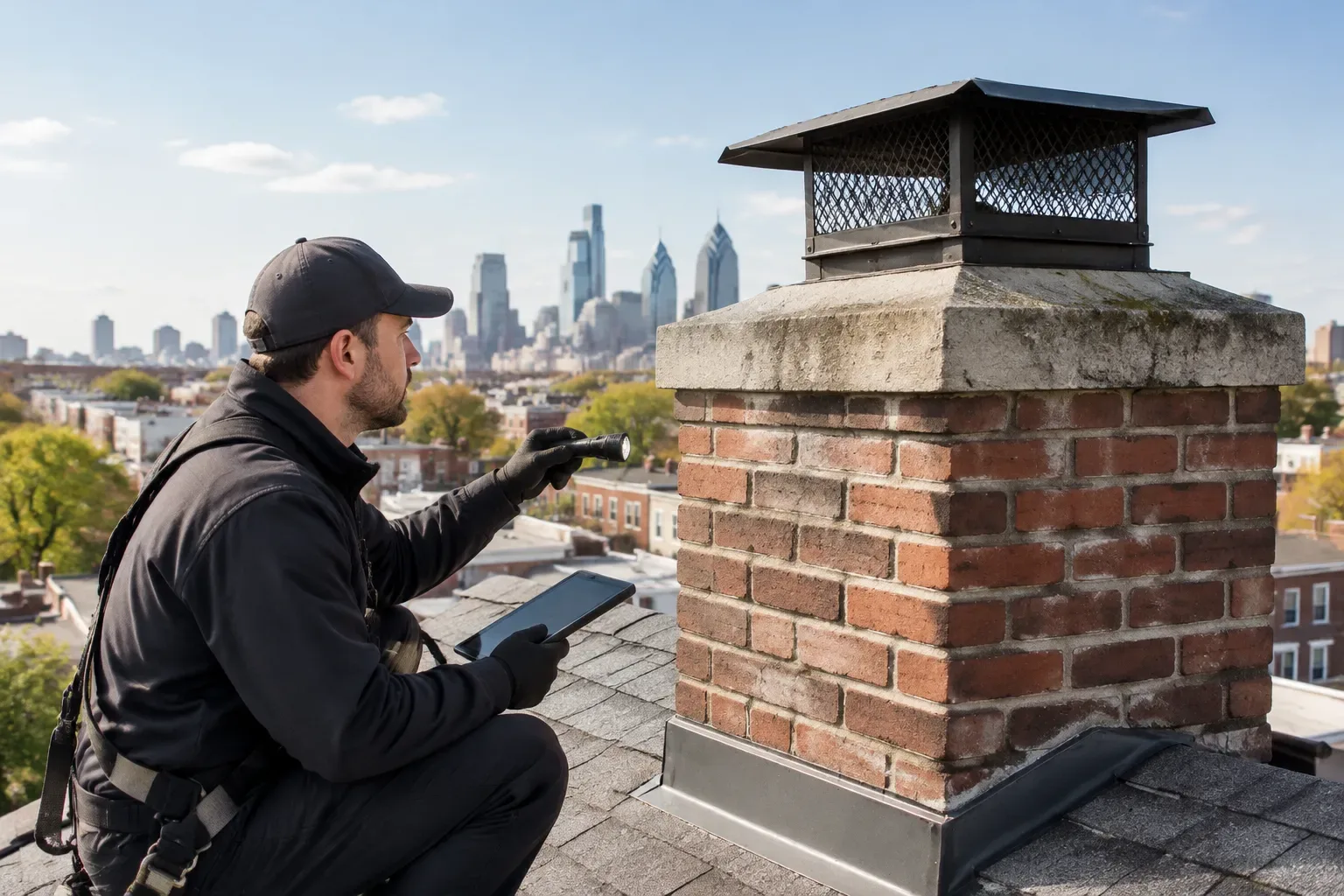
What Does a Chimney Inspection Check on Vernon Rd?
A chimney inspection checks the accessible parts of the fireplace or appliance connection, flue, liner, chimney exterior, cap, crown, masonry, flashing, and signs of blockage, deterioration, or water entry. For a property on Vernon Rd, the exact scope depends on the chimney configuration, fuel-burning appliance, roof access, and whether a closer look inside the flue is needed.
An inspection is an evaluation, not automatically a cleaning or repair visit. It can identify conditions that may need sweeping, further examination, or repair, while documenting any access limits that prevent a complete view. Tiptop maintenance offers chimney-focused information and services for Philadelphia-area property owners.
Quick Answer
A professional chimney inspection generally looks for:
- Creosote, soot buildup, debris, and other obstructions in accessible flue passages.
- Visible liner damage, gaps, deterioration, or signs that venting may be compromised.
- Fireplace, firebox, damper, smoke chamber, and accessible appliance connector concerns.
- Cap, crown, flashing, brick, mortar, and water-related exterior damage.
- Evidence of draft or venting concerns, such as staining, odors, or smoke patterns, without assuming one symptom proves one cause.
The purpose is to identify observed safety and condition concerns, explain what could not be accessed, and recommend an appropriate next step. The Chimney Safety Institute of America overview of chimney inspections explains why inspection scope can change with the system and circumstances.
Which parts of the fireplace and flue are checked?
The inspection usually begins at the point where combustion occurs or where exhaust enters the chimney. For a wood-burning fireplace, that may include the firebox, damper area, smoke chamber, and visible throat. For a stove, furnace, or other appliance, accessible vent connectors and the connection to the chimney may also matter.
Inside the flue, an inspector looks for accessible signs of soot, glazed or excessive creosote, loose material, debris, nesting material, cracked liners, displaced sections, or narrowing that could restrict exhaust flow. A liner is the protective passage that carries smoke or combustion gases out of the building. Damage can affect safe venting, but its extent cannot always be confirmed without the appropriate access or camera examination.
Smoke entering a room, a persistent odor, or weak draft are useful observations to report. They do not prove a cracked liner or a blocked flue on their own. The cause could involve the chimney, the appliance, room air pressure, fuel conditions, or another building-system issue outside chimney service scope.
What does the exterior chimney check include?
An exterior review focuses on components that keep water out and help protect the flue opening. This typically includes the visible cap, crown or wash, upper chimney masonry, mortar joints, flashing where the chimney meets the roof, and evidence of moisture intrusion.
Philadelphia's freeze-thaw cycles can worsen small defects when water enters open mortar joints, cracked crowns, or damaged caps, then freezes and expands. Rain and snow exposure can also reveal weaknesses around flashing or masonry through staining, spalled brick, loose mortar, or interior moisture signs. These observations do not establish how long damage has existed, but they help determine whether repairs or closer evaluation are warranted.
A cap can help keep out rain, leaves, and animals while allowing exhaust to pass. If a cap is bent, loose, corroded, or missing, a closer review of chimney cap repair options in Philadelphia may be useful. A cracked crown deserves separate attention because it is the sloped top surface intended to shed water.
What can an inspection reveal that a ground-level look cannot?
A chimney can appear sound from the yard while the flue or roof-level components have a problem. Roof access may allow a closer view of the crown, cap, flashing, and upper masonry. Interior examination can reveal deposits, obstructions, or liner concerns that are not visible from the fireplace opening.
Access is not guaranteed. Closely spaced buildings, steep roofs, weather, locked areas, or an unsafe roof route can limit what can be observed. A useful report should state those limitations rather than treating an inaccessible area as verified sound.
What are Level 1, Level 2, and Level 3 chimney inspections?
Inspection levels describe how much of the system is examined. The right level is based on the appliance, changes to the system, known symptoms, accessibility, and the reason for the visit. The applicable guidance for chimneys, fireplaces, vents, and solid-fuel-burning appliances is addressed by NFPA 211; a general article cannot determine the proper level for a specific address.
Level 1 inspection
A readily accessible examination of the chimney, appliance connection, and visible components. It is often appropriate for routine evaluation when the system has not changed and no unusual concern has been reported.
Level 2 inspection
A more detailed examination that may be appropriate after a change in appliance or fuel type, an event that could have affected the chimney, or a property transfer. It can include additional accessible areas and internal examination methods.
Level 3 inspection
An investigation involving concealed areas when a serious hazard is suspected and the issue cannot be resolved through lower-level inspection. It may require limited removal or opening of building components.
A camera scan, sweeping, masonry repair, liner repair, or roof work should not be assumed to be included in every inspection. Ask what is included before the appointment, especially if you are investigating a specific symptom.
Is chimney sweeping the same as a chimney inspection?
No. Sweeping removes combustible deposits and debris when cleaning is needed. Inspection evaluates accessible condition, safety concerns, and performance-related issues. A visit may include both only if that scope is specifically arranged.
Creosote is a combustible residue produced by wood burning. An inspection may identify visible buildup and recommend cleaning, but the finding should be distinguished from the cleaning work itself. For more detail on when buildup and other symptoms may point toward maintenance needs, see signs a chimney may need cleaning.
The common mistake is assuming a clean-looking firebox means the whole system is clean and sound. Deposits and damage can be farther up the flue, while water-related damage may be concentrated at roof level.
How should you prepare for a Vernon Rd chimney inspection?
A little preparation helps the inspector evaluate the correct system and understand what has changed. Clear access to the fireplace, appliance, cleanout, and relevant basement or utility areas when possible. Keep pets away from the work area, and avoid using the appliance immediately before the appointment unless you have been given different instructions.
- Write down the appliance type, fuel used, recent smoke or odor events, leaks, stains, and any draft concerns.
- Gather prior inspection reports, cleaning records, repair invoices, and information about appliance replacements or renovations.
- Point out every fireplace, stove, furnace connection, or flue you believe may be involved, especially if more than one flue shares a chimney structure.
- Ask what areas will be examined, what access limitations apply, whether cleaning is separate, and how significant findings will be documented.
Older Philadelphia buildings can have rebuilt sections, multiple flues, or appliances changed over time. That does not mean a particular Vernon Rd property has those conditions. It does mean flue continuity, liner condition, and appliance-to-chimney compatibility are sensible questions when the system history is unclear.
What should a useful inspection report tell you?
The report should separate observed conditions from assumptions. It should identify the component and location involved, describe the concern in plain language, explain any access limitation, and state the recommended next step. Clear photos of significant accessible defects are more useful than a vague statement that the chimney is “unsafe.”
Not every finding requires major work. Loose debris may call for cleaning; a damaged cap may call for repair or replacement; visible masonry deterioration may need a focused repair evaluation. If a condition presents an immediate concern or follows a chimney fire, storm damage, or sudden structural change, review the scope of 24/7 chimney emergency services in Philadelphia rather than continuing to use the system.
For routine cleaning questions after an inspection, this guide to chimney cleaning costs in Philadelphia can help frame the questions to ask about scope. A cost page cannot replace a property-specific assessment, particularly where access, deposits, or repairs are involved.
When should you schedule a more detailed evaluation?
A basic accessible review may be enough for routine maintenance in a stable system. More detailed work can make sense after an appliance change, chimney fire, major storm event, structural movement, a home purchase, recurring smoke entry, suspected liner damage, or an unresolved water issue.
Buying a property is a good time to clarify which appliance vents into which flue and whether all parts of the system can be evaluated. Do not rely only on a general home inspection description if the chimney or a fuel-burning appliance is an important part of the purchase decision.
The practical takeaway is simple: request a scope that matches your system and concern, then use the report to decide whether cleaning, monitoring, targeted repair, or a more detailed inspection is the sensible next step.
Ready to discuss your project?
For a Vernon Rd chimney concern, ask about the inspection scope, accessible components, and documentation before booking.
FAQ
Does a chimney inspection include the fireplace and flue?
Usually, yes, to the extent those areas are accessible and included in the booked scope. An inspector may review the firebox, damper area, smoke chamber, visible flue passage, and appliance connection where applicable. The depth of the flue review can vary. Ask whether the visit includes camera examination, because that should not be assumed from the word “inspection” alone.
Does a chimney inspection check for creosote?
It can identify visible soot and creosote in accessible areas and determine whether cleaning should be considered. Creosote is not the only concern, though. Debris, obstructions, liner deterioration, and moisture damage can also affect the system. If cleaning is recommended, clarify whether it is a separate service and what portions of the chimney will be cleaned.
Will the inspector check the chimney cap and crown?
A proper exterior review generally considers accessible cap and crown condition, along with upper masonry and flashing. The cap helps protect the opening from rain and animals, while the crown sheds water away from the chimney structure. Safe roof access affects how closely these components can be examined. A ground-level observation may not be enough to confirm their condition.
How often should a chimney be inspected?
The CSIA inspection guidance recommends an annual inspection for chimneys, fireplaces, and vents. The appropriate scope can still vary with the appliance, fuel, usage, known symptoms, and recent changes. If the system has been altered, damaged, or has not been used for a long time, explain that history before scheduling so the inspection can be scoped appropriately.
Should I get a chimney inspection before buying a house in Philadelphia?
Yes, it is a reasonable due-diligence step if the property has a fireplace, stove, furnace vent, or other appliance using a chimney. A general home inspection may not fully evaluate liner condition, draft pathways, or concealed chimney concerns. Ask which flues serve which appliances and whether a more detailed examination is appropriate before relying on the system after closing.
What if the inspection finds a cracked liner or damaged masonry?
The next step depends on what was observed, where it is located, and whether the defect affects safe use. A report should identify the condition and recommend a focused repair assessment rather than treating all cracks as identical. For a masonry concern, chimney repair information can help you understand the kinds of follow-up questions to ask about scope and access.
Why does my fireplace smell after rain?
Rain-related odor can be associated with moisture entering the chimney, damp deposits, or air movement through the flue, but the symptom alone does not establish the cause. Exterior defects around the cap, crown, flashing, or masonry are possible contributors. It could also involve indoor humidity or another building source, so an inspection should distinguish observed chimney evidence from assumptions.
Does a chimney inspection include air duct cleaning?
No. Chimney inspection and air duct cleaning involve different systems and different concerns. A chimney inspection evaluates combustion venting and chimney components, while duct cleaning concerns forced-air HVAC ducts. If indoor dust or HVAC airflow is the separate issue, review whether air duct cleaning is necessary in Philadelphia and discuss the symptoms with the appropriate service provider.