
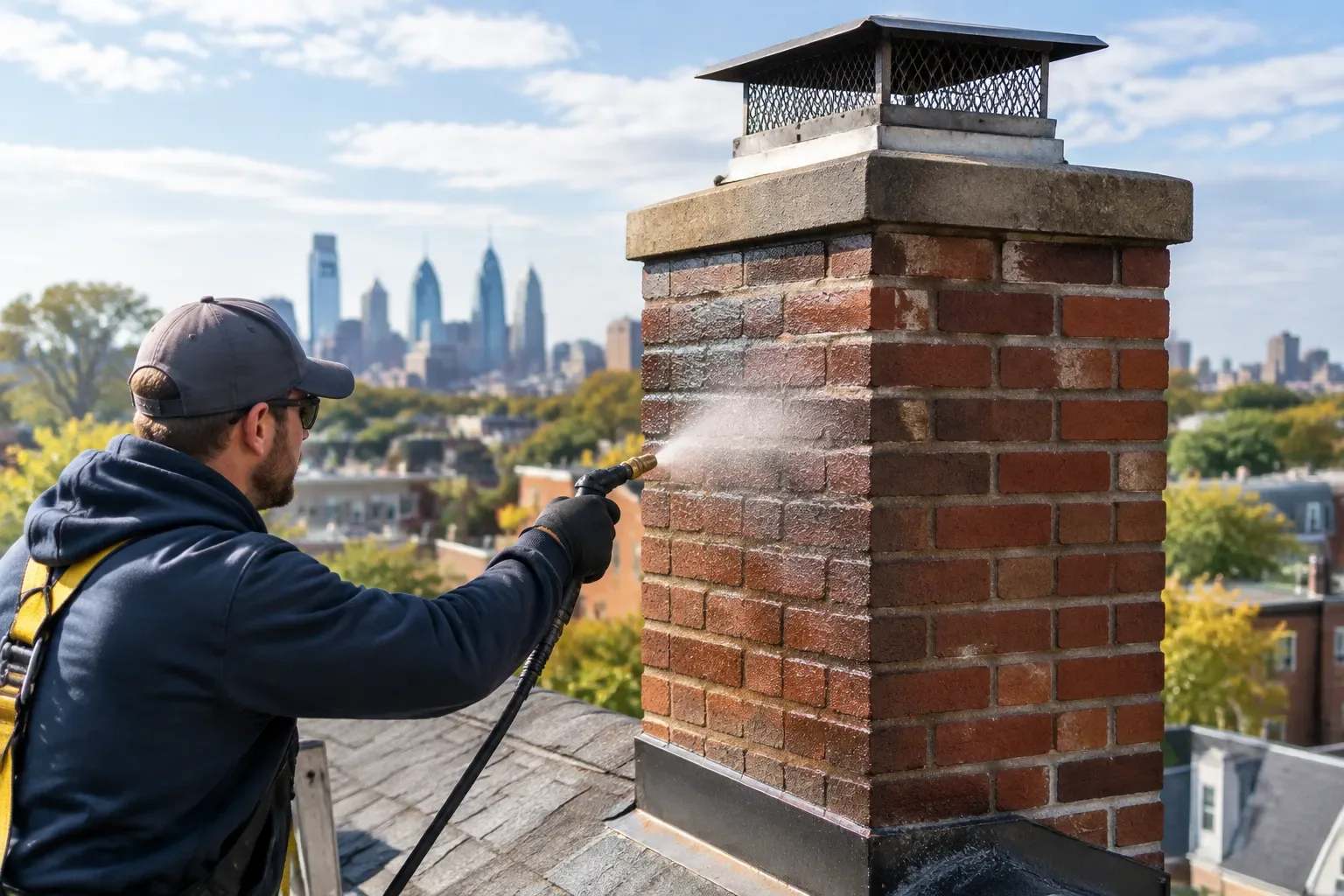
Does Chimney Waterproofing Stop Brick Damage on Stenton Ave?
Chimney waterproofing can help reduce future moisture absorption and limit freeze-thaw damage in sound brick and mortar. It cannot repair bricks that are already spalling, replace missing mortar, fix a cracked crown, or stop water entering through failed flashing or a damaged cap.
For a property on or near Stenton Ave, the right first step is to identify where water is entering and whether the masonry is still sound enough for treatment. A breathable, masonry-compatible water repellent may be useful after needed repairs, but it is not a substitute for masonry work.
Quick Answer
Yes, waterproofing may help prevent additional brick damage when the chimney has intact brick, sound mortar joints, and no active leak path. It works by reducing how much rain and melting snow the masonry absorbs while still allowing moisture within the wall to dry outward.
It will not reverse existing damage. If the chimney has crumbling faces, open joints, crown cracks, loose flashing, or interior moisture staining, those conditions need diagnosis and repair before any water-repellent treatment is considered.
Why absorbed water damages chimney brick
Brick and mortar are porous. When water enters their pores and freezes, it expands. Repeated freeze-thaw cycles can contribute to cracks, loosening brick faces, and spalling, which is the flaking or breaking away of the outer brick surface.
Philadelphia's seasonal rain, snow, and winter weather can repeatedly wet a chimney. That makes moisture control practical preventive maintenance, not a cosmetic extra. Still, water may be entering from several places, so a damp chimney should not automatically be blamed on the brick itself.
What does waterproofing fix, and what requires repair first?
A useful way to decide is to separate prevention from restoration. Waterproofing can be part of prevention. Repairs restore components that have already failed.
Sound brick and intact mortar
A breathable water repellent may reduce future absorption after the exterior has been checked for leak paths and the masonry is dry.
Recessed or missing mortar joints
Repointing is usually the first consideration. It replaces deteriorated mortar so water is not entering through open joints.
Cracked, spalling, or loose brick
These conditions require a masonry assessment. Sealer cannot bond broken brick back together or restore lost material.
Cracked crown, failed flashing, or cap problems
These are direct water-entry routes that need component-specific repair. Treating wall surfaces alone will not correct them.
Older masonry deserves extra care. Some older chimneys use softer historic brick and weathered or lime-based mortar, so a rigid repair or incompatible coating can interfere with drying or add stress. The National Park Service advises matching repair materials and methods to existing historic masonry and addressing moisture-related deterioration rather than concealing it in its guidance on repointing historic masonry.
Which signs point to a moisture problem?
Visible symptoms are clues, not proof of a single cause. An inspection is what can confirm the water path and the masonry condition.
| What you notice | Possible cause | What an inspection may need to confirm |
|---|---|---|
| White, chalky deposits on brick | Moisture carrying salts to the surface | Whether moisture is entering through masonry, joints, crown, flashing, or another route |
| Flaking or crumbling brick faces | Freeze-thaw exposure or long-term moisture movement | Depth of brick deterioration and whether replacement is needed |
| Recessed, cracked, or missing mortar | Weathering and water entry at joints | Whether repointing alone is sufficient or brick is also unstable |
| Damp ceiling or wall near the chimney | Roof, flashing, crown, or masonry leak | The actual entry point, including conditions outside the chimney itself |
| Rust on a damper or other metal part | Persistent moisture exposure | Whether water is entering the flue, firebox, or chimney exterior |
A damp interior wall can also originate in roofing, siding, plumbing, or condensation issues outside chimney service scope. That is why applying a water repellent before source tracing can be an expensive detour.
How should a chimney be checked before waterproofing?
The evaluation should cover the whole exterior moisture system, not only the visible brick wall. For readers seeking a general maintenance starting point, Tiptop maintenance publishes chimney-focused information for Philadelphia properties.
- Look from the ground for missing mortar, displaced brick, white deposits, staining, and obvious crown damage. Do not climb onto a roof or chimney without appropriate training and safe access.
- Check accessible interior areas for staining, dampness, rust, odors, or water around the fireplace opening after rain.
- Have the roofline components assessed, including the crown, flashing, cap, brick condition, and mortar joints.
- Repair active defects and allow masonry to dry as appropriate before selecting a compatible breathable treatment.
- Recheck after heavy rain and winter weather, then address new cracks or water entry promptly.
A thorough chimney inspection in Philadelphia can help distinguish a surface-absorption issue from a crown, flashing, cap, or structural masonry problem. Regular inspection and maintenance also align with the NFPA's chimney fire-safety guidance, particularly when visible deterioration affects a working chimney or fireplace.
Why a breathable treatment matters on older brick
A water repellent and a waterproof-looking coating are not necessarily the same thing. A breathable masonry treatment is intended to reduce liquid-water uptake while allowing water vapor to escape. A film-forming product can create a surface layer that may trap moisture when used on unsuitable masonry.
No generic product is right for every chimney. Before choosing one, ask what masonry it is compatible with, whether the chimney has dried adequately, and whether the manufacturer permits use on the specific brick and mortar. For widespread deterioration, chimney masonry repair in Philadelphia is a more relevant next step than simply applying a surface treatment.
When are the crown, flashing, and cap the real problem?
Rain does not need to soak through brick to cause damage. A cracked or poorly sloped crown can direct water into the masonry below it. Failed flashing can admit water where the chimney meets the roof. A missing or damaged cap can allow bulk rain into the flue and chimney structure.
These defects can leave similar stains and dampness, but their remedies differ. A suspected crown defect calls for chimney crown repair, while a cap issue may call for chimney cap installation or replacement. Waterproofing the brick without resolving either defect leaves the main water path open.
What is the most common waterproofing mistake?
The biggest mistake is treating the visible symptom instead of the cause. Sealing over spalling brick or failing mortar can delay a proper assessment while water continues entering through another opening.
The practical takeaway is simple: use waterproofing to help protect repaired, sound masonry, not to disguise deterioration. If damage is spreading, bricks are loose, or water is entering the interior, an assessment should come before any coating. If water entry is sudden or severe, Philadelphia readers can review options for 24/7 chimney emergency services.
Ready to discuss your project?
If you are seeing moisture stains or brick deterioration near Stenton Ave, ask for an inspection that identifies the water path before waterproofing is considered.
FAQ
Does chimney waterproofing stop spalling brick?
It may help reduce future moisture absorption in masonry that is still sound, which can lower one contributor to freeze-thaw damage. It does not restore a brick face that has already spalled or confirm why it happened. Spalling can involve long-term moisture movement, failing mortar, crown defects, or other conditions that should be assessed before treatment.
Can I waterproof a chimney with cracked mortar?
Not as the first fix. Cracked, recessed, or missing mortar creates direct paths for water and should be evaluated for repointing. The repair mortar should be compatible with the existing masonry, especially on older construction. Once joints and other defects are repaired and the chimney is appropriately dry, a compatible water repellent may be considered for preventive protection.
Is a chimney cap enough to prevent water damage?
A cap helps keep direct rain, debris, and animals out of the flue, but it does not protect every exterior water-entry point. Water can still reach masonry through a crown crack, open mortar joint, or failed flashing. A cap works best as one part of an overall moisture-control approach, rather than as a complete substitute for exterior repairs.
How can I tell if chimney water is coming through the flashing or the brick?
You usually cannot confirm that from a stain alone. Water near the roof-to-chimney intersection may suggest flashing, while widespread white deposits or deteriorated joints can suggest masonry moisture, but either symptom can have multiple explanations. A roofline inspection should examine flashing, crown, cap, brick, and mortar together rather than assuming one source.
Should I have a leaking chimney cleaned before waterproofing?
Cleaning and waterproofing solve different problems. Chimney cleaning addresses soot, creosote, and debris within the system, while waterproofing concerns exterior moisture absorption. If the chimney is used, maintenance should not be neglected, and this guide to chimney cleaning costs in Philadelphia can help with that separate planning question. A leak still needs its source identified and repaired.
Can paint be used instead of chimney waterproofing?
Paint is not automatically a safe substitute. Some coatings can form a film that limits the masonry's ability to dry, which can worsen moisture-related deterioration on unsuitable brick or mortar. Product selection should follow an assessment of the chimney materials and condition. Never use paint simply to hide stains, crumbling faces, or white deposits.
Does waterproofing make a chimney leak-proof?
No. It can reduce water absorbed through sound masonry surfaces, but it cannot make a chimney leak-proof. Water can bypass treated brick through crown cracks, flashing failures, open joints, cap problems, roof defects, or larger masonry cracks. The goal is better moisture management after repairs, not a guarantee that all water problems are eliminated.