
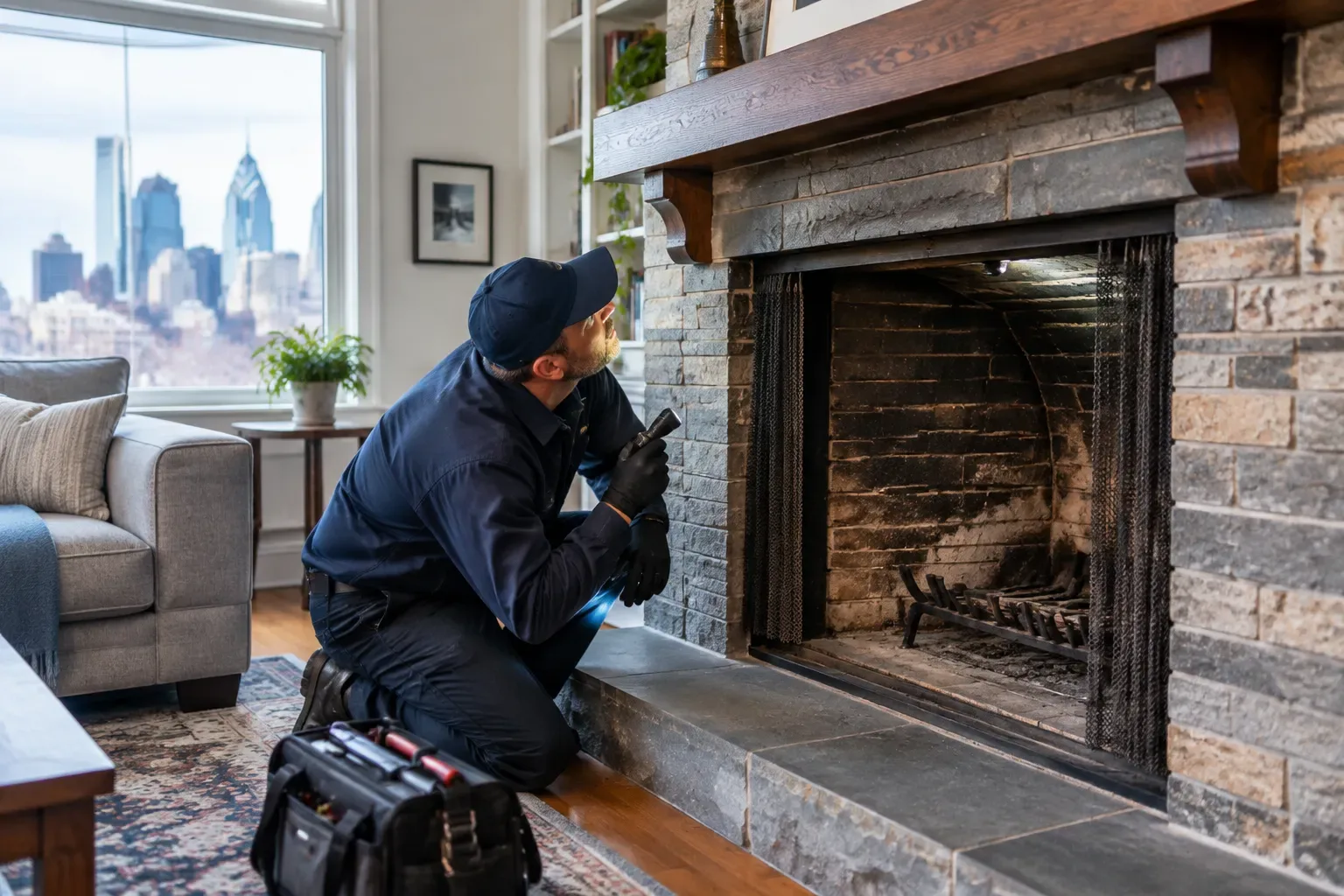
Should I Stop Using a Fireplace on Wister St?
Yes, stop using the fireplace immediately if smoke enters the room, a carbon-monoxide alarm activates, you suspect a chimney fire, or you see loose masonry, heavy damage, sparks, or intense heat around the chimney. Do not light another fire simply because the smoke clears or the firebox looks clean.
For a Wister St property, the next step depends on the symptom and the appliance. A wood-burning fireplace may need its flue, draft, creosote buildup, and masonry assessed. A gas fireplace with soot, burner trouble, damaged glass, or unusual odors needs qualified gas-appliance service. Tiptop maintenance provides chimney-focused information and services for Philadelphia residents, but no one can judge a specific fireplace safe without evaluating its condition.
Quick Answer
Stop using the fireplace and arrange an inspection before reuse if it repeatedly smokes indoors, smells strongly of smoke while idle, has visible chimney damage, drops debris, or shows signs of a blockage or failed venting component. Leave the building and contact emergency services for an active fire, smoke emergency, or suspected carbon-monoxide exposure.
A routine sweep can address soot or creosote when that is the confirmed issue. It is not a substitute for diagnosing a damaged liner, unstable masonry, a draft problem, or a gas-appliance fault.
Which fireplace warning signs mean stop using it right away?
The clearest stop-use signs involve combustion gases, fire, or structural instability. Treat the following as reasons not to use the appliance again until the right professional has evaluated it.
| What you notice | What it could indicate | What to do now |
|---|---|---|
| Smoke spilling into the room | An obstruction, poor draft, a damper problem, inadequate combustion air, or a venting defect | Stop the fire if safe to do so, ventilate only if it is safe, and do not reuse the fireplace until it is assessed. |
| Roaring or rumbling noise, sparks from the chimney, or extreme chimney heat | A possible chimney fire | Leave the building and contact emergency services. Do not use the fireplace afterward until it has been inspected. |
| Carbon-monoxide alarm activation or symptoms such as headache, dizziness, nausea, or confusion | Possible carbon-monoxide exposure from a combustion source, though another source may also be involved | Get outside, contact emergency services, and do not re-enter until responders say it is safe. |
| Loose bricks, falling debris, major cracks, or spalling masonry | Deteriorated chimney structure or water-related damage | Stop using the fireplace and keep people clear of the affected area until the chimney is evaluated. |
| Strong smoke odor when no fire is burning | Residual soot, downdraft, a flue issue, or another source in the building | Avoid using the fireplace until the source is identified. |
The National Fire Protection Association's chimney fire safety guidance emphasizes maintenance and safe operating practices as part of reducing chimney-fire hazards. Smoke alarms and carbon-monoxide alarms are essential household safeguards, but an alarm is a warning device, not a diagnosis. The CPSC carbon-monoxide safety information provides additional household guidance.
What should I do after smoke, a chimney fire, or an alarm?
Do not try to troubleshoot an active emergency from the roof, in the firebox, or by starting a second fire. The immediate goal is to protect people and prevent further exposure.
- Stop using the appliance. If there is active fire, heavy smoke, a carbon-monoxide concern, or danger to occupants, leave the building and contact emergency services.
- Do not relight the fireplace after a suspected chimney fire, even if flames are no longer visible.
- Make a note of what happened: fuel type, smoke location, odors, alarm activation, unusual sounds, visible damage, and the date of last use.
- Arrange the appropriate evaluation. A chimney inspection may be needed for wood-burning systems; a gas fireplace may require qualified gas-appliance service.
- Resume use only after the relevant issue has been identified and addressed.
For a non-active but serious chimney concern, Philadelphia residents can review 24/7 chimney emergency service information. An emergency response is not the same as a routine cleaning appointment, and active fire or suspected carbon-monoxide exposure should always be handled through emergency services first.
Is smoke in the room always a chimney-cleaning problem?
No. Smoke entering the room is an observable symptom, not proof of one cause. A closed or malfunctioning damper, a blocked flue, poor draft, wet fuel, an air-pressure issue, incorrect appliance operation, or a venting defect can all contribute. Some causes may be outside the scope of chimney cleaning and require a different trade or building assessment.
A sweep may be appropriate if an inspection finds creosote or a removable obstruction. If the finding is a liner defect, masonry problem, or venting design issue, cleaning alone will not make the system safe.
For wood-burning systems where maintenance is the confirmed need, read about chimney cleaning in Philadelphia and the site's guide to signs that a chimney needs cleaning. The right scope should follow the finding, not precede it.
How do wood-burning and gas fireplace stop-use signs differ?
Both systems can create a safety concern, but they do not fail in exactly the same ways. Do not assume a gas unit is maintenance-free or that a wood-burning fireplace should be handled like a gas appliance.
Wood-burning fireplace
Stop use for indoor smoke, suspected chimney-fire signs, creosote concerns, flue blockage, or visible chimney deterioration. Burn only appropriate fuel for the appliance and avoid trash, plastics, treated wood, and other unapproved materials.
Gas fireplace or gas insert
Stop use for unusual odors, soot, burner or pilot problems, damaged glass, venting concerns, or signs of incomplete combustion. Do not attempt to clean or adjust gas components as if they were part of a wood-burning firebox.
The EPA's Burn Wise guidance explains how wood selection, appliance operation, and maintenance affect smoke and combustion performance. For a gas unit, see the separate guidance on whether gas fireplaces need cleaning rather than applying wood-fireplace advice without checking the appliance type.
Can exterior chimney damage make fireplace use unsafe?
It can. Cracked mortar, loose brick, spalling, crown damage, failed flashing, and a damaged or missing cap are exterior conditions that deserve attention before continued use. They may allow water in, worsen during freeze-thaw cycles, or signal a structural issue that cannot be judged from the living room.
Philadelphia's winter wetting and freezing can enlarge existing cracks in masonry. In older chimney systems, deteriorated mortar, altered fireplaces, or obsolete liners may also affect draft and containment of combustion gases. None of those conditions should be assumed for a particular Wister St building, but visible deterioration is a practical reason to pause use and seek an inspection.
In attached or closely spaced housing, smoke leakage, chimney-fire heat, and falling masonry may affect nearby occupants or structures as well. That makes a prompt shutdown more prudent than repeated test fires.
When is cleaning enough, and when is repair or inspection needed?
The distinction matters because the common mistake is booking a cleaning and assuming every underlying problem will be resolved. Cleaning removes soot, creosote, and certain debris. Inspection evaluates accessible condition and can identify whether further repair or a more detailed assessment is warranted.
| Situation | Likely next step | Why cleaning alone may not be enough |
|---|---|---|
| Normal use with no symptoms, but maintenance is overdue | Schedule routine chimney cleaning and inspection | Hidden buildup or conditions in the flue may not be visible from the firebox. |
| Smoke entering the room or persistent smoke odor | Stop use and seek diagnosis before reuse | The cause may be draft, a blockage, a damper issue, or a venting defect. |
| Suspected chimney fire | Emergency action first, then professional evaluation | Heat can damage the flue or surrounding structure even after visible flames stop. |
| Cracks, loose brick, or water-related deterioration | Chimney and masonry assessment | Structural and water-entry issues need repair planning, not only sweeping. |
| Soot or malfunction symptoms on a gas unit | Qualified gas-appliance service | Gas burners, controls, glass, and venting require appliance-specific evaluation. |
If cost is part of your decision, the Philadelphia chimney cleaning cost guide can help frame the questions to ask. Price should not be used to choose between a needed safety inspection and a cleaning that does not address the actual defect.
What information should I have ready before scheduling help?
Useful details make it easier to direct the concern to the right type of service. Record whether the appliance is wood-burning or gas, when it was last used, where smoke appeared, whether an alarm sounded, and whether you noticed exterior damage, debris, water stains, or unusual smells.
A photo of visible exterior damage can be helpful if it can be taken safely from the ground. Do not climb onto the roof or lean into the flue to investigate. If indoor air quality remains a concern after the fireplace issue is addressed, air duct cleaning information for Philadelphia and the discussion of when air duct cleaning is necessary can help separate duct-maintenance questions from chimney or combustion problems.
What is the practical takeaway for a Wister St fireplace?
Do not use another fire to see if the problem repeats. Stop at the first serious warning sign, treat active fire or carbon-monoxide concerns as emergencies, and match the follow-up to the appliance and condition found. A careful assessment is safer than guessing that a cleared room, a clean-looking firebox, or a temporary fix means the system is ready to use.
Ready to discuss your project?
If a Wister St fireplace has smoked, smelled unusual, or shown damage, request guidance on the right next inspection or cleaning step.
FAQ
Should I stop using my fireplace if smoke comes into the house?
Yes. Stop using it until the cause is identified. Smoke spillage can result from a blocked flue, poor draft, damper trouble, fuel issues, inadequate air supply, or a venting defect. Open windows may reduce odor temporarily, but they do not establish that the fireplace is safe. If anyone has symptoms of carbon-monoxide exposure or an alarm activates, leave the building and contact emergency services.
Can I use my fireplace after a chimney fire?
No, not until it has been professionally evaluated. A chimney fire can damage the flue liner, masonry, or nearby materials even if the event seems brief and no longer produces visible flames. Do not relight the appliance as a test. Document what you observed, including noises, sparks, heat, or smoke, then arrange the appropriate post-event assessment.
Why does my fireplace smell like smoke when it is not in use?
A smoke odor can come from residual soot, creosote, downdraft, moisture interacting with deposits, or a problem in the flue. It may also have another source in the home, so the smell alone does not prove the chimney is responsible. Avoid using the fireplace until the source is identified, especially if the odor is strong, new, or accompanied by visible staining or smoke.
Are cracked chimney bricks a reason to stop using the fireplace?
Visible cracks, loose bricks, spalling, or falling masonry are reasons to stop and have the chimney assessed before continued use. Surface wear and serious structural deterioration are not always easy to distinguish from the ground. Water entry and freezing can worsen existing defects, and a damaged chimney may affect safe containment of heat and combustion gases.
Do gas fireplaces need a chimney inspection too?
Gas fireplaces and inserts need appliance-appropriate maintenance and evaluation when symptoms appear. Stop using a gas unit for unusual odors, soot, burner or pilot trouble, damaged glass, or suspected venting problems. Gas systems should not be treated as wood fireplaces, and a chimney sweep is not automatically the right response to every gas-appliance fault. Review the gas fireplace cleaning guide for a fuller overview.
How do I know whether I need cleaning or a repair?
Cleaning may be the right service when buildup or removable debris is the confirmed concern. Repair or a deeper inspection is more appropriate for smoke spillage, suspected liner damage, structural masonry problems, water damage, or a chimney-fire event. Explain the symptom rather than requesting one specific service by name. That gives the evaluator a better starting point and reduces the risk of solving only part of the problem.
Can I inspect my chimney myself before using it?
You can look for obvious, accessible changes such as loose debris in the firebox, a damaged damper, smoke stains, or visible exterior deterioration from the ground. Do not climb on the roof, reach into the flue, or rely on a quick visual check as proof of safety. Hidden creosote, blockages, liner damage, and masonry defects may require professional inspection methods.
Does fireplace smoke mean my air ducts need cleaning?
Not necessarily. Fireplace smoke is usually a combustion or venting question first, while duct cleaning concerns relate to the HVAC distribution system. Smoke can travel through a home and leave odors, but cleaning ducts before the source is corrected may not solve the problem. Address the fireplace or chimney issue first, then consider whether separate HVAC cleaning is warranted.