
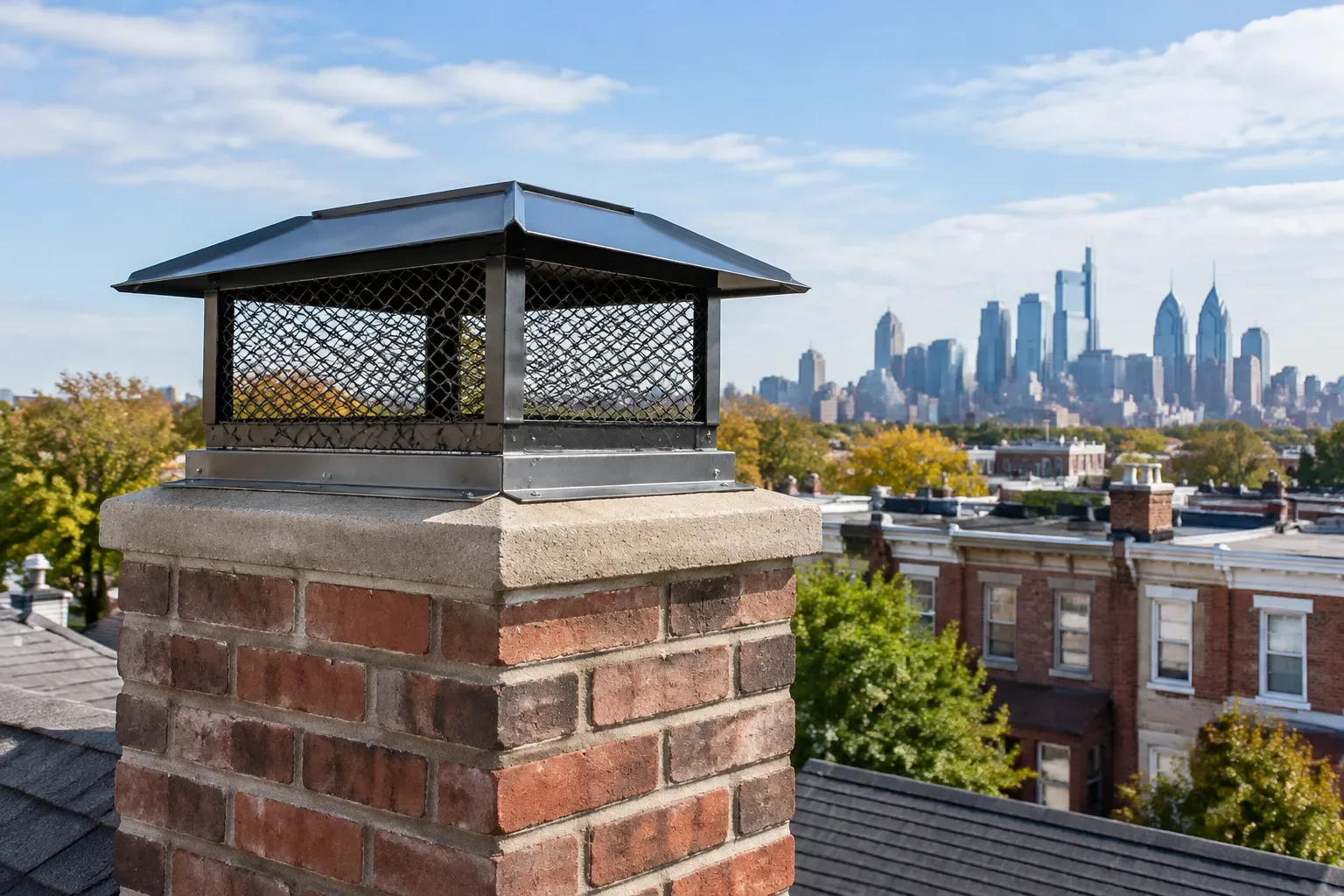
Can a Chimney Cap Prevent Downdrafts on Ogontz Ave?
Yes, a properly selected chimney cap can reduce a wind-driven downdraft, especially when gusts create turbulence at the top of an otherwise sound chimney. It is not a universal fix. Smoke, odors, or cold air coming down a flue can also point to a blockage, an inadequate flue or chimney height, a liner issue, nearby roofline turbulence, or negative indoor pressure.
For a property on or near Ogontz Ave, the sensible first step is to identify the pattern before replacing the cap. Tiptop maintenance can be a starting point for Philadelphia chimney information, but the right repair depends on the full venting system, not the visible top alone.
Quick Answer
A standard cap primarily keeps out rain, debris, and animals. A wind-resistant or directional cap may also help disrupt wind that would otherwise push down into the flue. It can be a good solution when wind at the chimney termination is the confirmed problem.
A new cap will not correct a blocked flue, damaged liner, poorly sized vent, low chimney height, competing kitchen or bathroom exhaust, or another combustion problem. If smoke or combustion odors enter the living space, stop using the fireplace or fuel-burning appliance until it can be evaluated.
How does wind create a chimney downdraft?
A chimney drafts when warmer exhaust rises through the flue and exits above the roof. Wind can interfere when it hits a chimney top, nearby roof section, addition, or adjoining building and creates a zone of turbulent or higher pressure around the opening. Instead of air leaving the flue smoothly, outside air can be forced downward.
The symptom is what you notice: a cold rush from the fireplace, a smoky odor, or visible smoke entering the room. Wind turbulence is only one possible cause. A chimney inspection can confirm whether the cap, height, termination location, flue condition, and surrounding roof geometry support reliable draft.
Nearby rooflines and adjoining structures deserve a close look, particularly where a chimney is lower than another part of the building or sits near a taller neighboring structure. That arrangement can place the termination in turbulent air. It is a feature to assess at the individual property, not an assumption about every home on Ogontz Ave.
Which chimney cap is appropriate for a downdraft problem?
Cap design matters, but compatibility matters more. The cap must fit the flue, crown, appliance, and manufacturer requirements without restricting exhaust. The Chimney Safety Institute of America explains the protective role of chimney caps, including their role in keeping out rain, animals, and debris.
Standard rain-and-animal cap
A practical choice for keeping precipitation, leaves, and wildlife out of an open flue. It may help modestly with incidental wind, but it is not designed as a dedicated answer to persistent wind downdrafts.
Wind-resistant or directional cap
Built to reduce turbulence at the termination or shield the opening from certain wind effects. It may help when an inspection ties the problem to wind at the top of the chimney.
Custom termination solution
May be considered where chimney height, roof geometry, multiple flues, or appliance requirements complicate the situation. This requires a system-specific recommendation rather than choosing a cap by appearance alone.
A rotating or specialized design should not be installed simply because a room feels drafty. It may be unsuitable for a particular appliance or flue. Secure fit is also essential because a loose, undersized, or poorly attached cap can rattle, admit water, restrict flow, or fail in high winds.
What other problems can look like a cap-related downdraft?
A cap can appear to have failed when the real fault is lower in the system. Older or altered Philadelphia homes may have masonry chimneys with a damaged, unlined, undersized, or poorly configured flue. Those are conditions to verify, not assumptions about a particular address.
| What you notice | Possible cause | What an inspection can confirm |
|---|---|---|
| Smoke enters only during certain wind directions | Wind turbulence at the termination or surrounding roofline | Cap design, chimney height, termination placement, and nearby roof geometry |
| Smoke or odors appear when a range hood, bath fan, or dryer runs | Negative indoor pressure competing for combustion air | Whether exhaust equipment changes draft and whether another ventilation issue is present |
| Weak draft when starting a cold fireplace | Cold flue, damper issue, wet fuel, or inadequate initial draft | Damper operation, flue condition, fireplace configuration, and signs of obstruction |
| Persistent odor, poor draft, or debris falling into the firebox | Nesting, leaves, creosote, or another flue blockage | The condition and clearance of the flue, liner, cap, and smoke chamber |
| Water staining or a visibly loose cap | Damaged cap, crown, mortar, or flashing | The condition of the chimney top and any needed repairs |
Kitchen hoods, bathroom fans, dryers, and other exhaust equipment can lower indoor air pressure. A naturally vented fireplace, furnace, or water heater may then struggle to pull combustion gases upward. A cap cannot solve that pressure imbalance by itself. If ductwork or a dryer vent is part of the pressure question, air duct cleaning in Philadelphia addresses a related service area, though ventilation design or appliance venting may require evaluation outside of chimney cleaning.
What should be checked before replacing a chimney cap?
Replacing a damaged cap can be worthwhile, but it should follow a diagnostic sequence. This helps prevent paying for a top-mounted solution when the actual problem is a blockage, liner defect, or pressure issue.
- Record when the problem happens: note wind direction, whether the fireplace is cold, and whether exhaust fans, the dryer, or other fuel-burning appliances are running.
- Stop using the affected fireplace or appliance if smoke or combustion odors enter the room, and verify that carbon-monoxide alarms are operational.
- Have the cap, flue opening, crown, masonry, liner, damper, appliance connection, chimney height, and roof geometry evaluated together.
- Compare the recommended cap with the confirmed cause, including whether repair, cleaning, liner work, height changes, or ventilation changes are more appropriate.
- Use the appliance only after the underlying draft or venting issue has been addressed and normal operation has been verified.
Inspection should also look for creosote and defects that affect safe venting. The NFPA's chimney safety guidance emphasizes the fire and maintenance concerns associated with chimneys and fireplaces. For wood-burning equipment, the EPA's fireplace and wood-stove guidance also supports addressing operation, maintenance, and ventilation together rather than treating a cap as a cure-all.
When is a cap repair enough, and when is more work needed?
A simple cap repair or replacement may be appropriate if the existing unit is missing, loose, rusted, damaged, or clearly allowing debris and animals into an otherwise functional flue. It may also make sense when the observed issue is limited to wind turbulence and the chimney system checks out.
More work may be needed when the crown is cracked, mortar is deteriorated, the liner is damaged or absent, the flue is blocked, or the termination sits in an unfavorable pressure zone. Freeze-thaw exposure can worsen cracks in crowns and mortar joints over time, allowing water intrusion that should be addressed alongside cap work. In those cases, chimney emergency service information may be relevant for an urgent visible defect, while a planned assessment can determine the correct long-term scope.
Do not overlook cleaning. Creosote, nests, and debris can impair flow, and an inspection may show that cleaning is needed before any cap decision. For a separate overview of expected cleaning considerations, see how much chimney cleaning can cost in Philadelphia.
What should you ask during a downdraft inspection?
A useful assessment should explain the evidence behind the recommendation. Ask whether the observed pattern points to wind at the top of the chimney, indoor negative pressure, a cold-start issue, an obstruction, or a defect in the flue or liner. Also ask whether the proposed cap is compatible with the connected appliance and why that particular design suits the chimney.
You can also ask what was found at the crown, masonry, liner, and appliance connection, and whether the chimney height or nearby roof geometry affects the result. A generic service assessment should lead to a specific explanation of what needs attention, not a promise that every downdraft requires the same cap.
The practical takeaway is simple: install or repair a cap when it fits the diagnosed problem, but do not let a cap replacement substitute for a complete draft and venting evaluation.
Ready to discuss your project?
Request a chimney draft and cap assessment for an Ogontz Ave-area property before choosing a replacement cap.
FAQ
Can a chimney cap stop cold air from coming down my fireplace?
It can reduce cold air caused by wind blowing directly into the chimney opening, particularly with a wind-resistant design. Cold air can also enter through an open damper, gaps around a cleanout door, or a poorly drafting flue. A cap is only one part of the system, so the timing and conditions of the draft should be checked before selecting one.
Why does my fireplace smoke only when it is windy?
Wind-specific smoke spillage can suggest turbulence around the chimney top, but it does not prove it. Wind may interact with rooflines, a taller section of the house, or nearby structures. An inspection can evaluate termination height and placement, then determine whether a specialized cap, a height adjustment, or another correction is more appropriate.
Can a kitchen exhaust fan cause a chimney downdraft?
Yes. A powerful kitchen hood, bathroom fan, dryer, or other exhaust device can pull air from the house and compete with a naturally drafting fireplace or fuel-burning appliance. If symptoms appear when fans run, that pattern is useful diagnostic information. It may call for a ventilation or appliance-venting solution rather than cap replacement alone. For related household airflow questions, read whether air duct cleaning is necessary in Philadelphia.
Is it safe to use my fireplace if smoke comes into the room?
No. Stop using it until the cause is evaluated. Indoor smoke and combustion odors can signal poor draft, a blockage, or a venting problem, and they should not be dismissed as normal. Check carbon-monoxide alarms, ventilate the area if safe to do so, and arrange an inspection before operating the fireplace or connected appliance again.
Does a chimney cap help keep animals and rain out too?
Yes. Keeping animals, nesting material, leaves, and rain out is a core purpose of a properly fitted cap. Those materials can contribute to blockages and moisture damage, which may worsen performance over time. A cap should be secure, appropriately sized, and paired with a sound crown so water is directed away from the chimney opening.
Do I need chimney cleaning before a new cap is installed?
Not always, but a flue should be checked for nests, leaves, creosote, and other obstructions before cap work is finalized. Cleaning may be recommended if the inspection finds buildup that could impair draft or create a fire concern. This is especially valuable if the chimney has been unused for a long period or has an unknown maintenance history.
Can a taller chimney fix a downdraft better than a new cap?
Sometimes. If the termination is in a turbulent zone created by the roof or surrounding structures, changing height may be more effective than changing only the cap. The correct approach depends on the flue, appliance, roof layout, and applicable installation requirements. A technician should evaluate the entire system rather than treating height as an automatic remedy.
What if the cap looks fine but I still smell smoke or exhaust?
A cap can look intact while the flue has a blockage, liner damage, a damper problem, or a pressure conflict inside the home. The odor could also come from an appliance or issue outside the chimney service scope. Avoid using the affected fuel-burning equipment until the source is identified, especially if the smell is persistent or accompanied by visible smoke.