
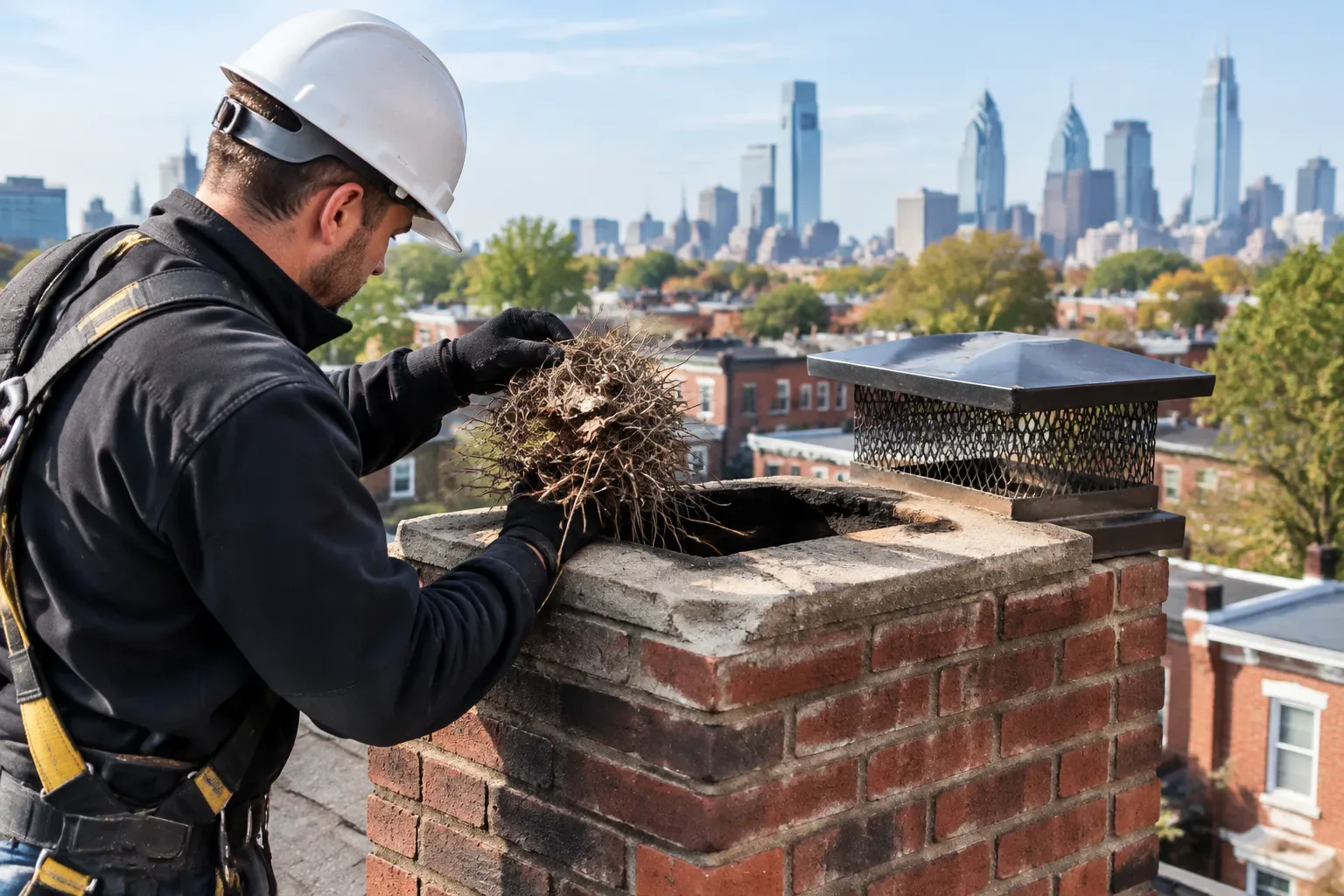
Can a Chimney Sweep Remove Bird Nests on Oak Lane?
Yes, a chimney professional can often remove an abandoned bird nest and clean loose nesting material from a chimney. The safe next step depends on what is inside: an empty nest, an active nest with eggs or young, or a live bird trapped in the flue. Do not use the fireplace or any appliance venting through the affected flue until it has been checked.
For Oak Lane households, a professional inspection can locate material around the damper, smoke chamber, liner, or chimney top, then determine whether cleaning, wildlife coordination, or a prevention measure is appropriate. Tiptop maintenance has published chimney-cleaning information for Philadelphia readers.
Quick Answer
A sweep may be able to remove an abandoned nest and clear debris that restricts the flue. If birds are actively nesting, or if eggs or dependent young are present, removal may need to wait or be coordinated with an appropriate wildlife professional or authority. Many native migratory birds, along with their nests, eggs, and young, may be protected under the Migratory Bird Treaty Act.
Do not light a fire to burn a nest out, push it downward with a pole, or put chemicals into the chimney. Those actions can worsen a blockage, damage components, or harm wildlife.
What is actually inside the chimney?
The right response starts with separating three situations that can look similar from indoors. Chirping, fluttering, a draft problem, or debris in the fireplace are observable symptoms, not proof of a particular cause. An inspection is what confirms the bird, nest status, and location of an obstruction.
An active nest
Bird activity at the chimney top, repeated chirping, or adult birds entering and leaving may indicate nesting. Eggs, hatchlings, or a protected species can change what removal is appropriate.
An abandoned nest or loose debris
Dry grass, twigs, feathers, and droppings can remain after birds leave. A chimney professional may be able to remove this material and assess whether it has mixed with soot or creosote.
A live bird in the flue
A bird may be trapped without a nest being present. This is a wildlife situation first, and attempting to smoke or force the bird out can cause injury and create a more difficult obstruction.
Chimney swifts deserve particular caution. They are associated with chimneys and are native migratory birds, so a professional should identify the situation before treating it as ordinary debris removal.
Why should the fireplace stay off until the flue is checked?
A nest can restrict draft, which is the upward movement that carries combustion gases out through the chimney. Restricted draft can send smoke into the room or allow combustion gases to spill back indoors. In Philadelphia winters, that concern can also apply to a heating appliance connected to the affected venting system.
The most common mistake is treating the nest as a nuisance and lighting a fire anyway. Fire may ignite dry nesting material, while a partial blockage can prevent exhaust from leaving as designed. A blocked flue is not always the only explanation for smoke or odor, however. Damper problems, liner damage, poor draft, appliance issues, or other conditions may also be involved and require inspection.
How does a chimney professional assess a bird nest?
Access varies widely. In masonry chimneys and older flue configurations, material may sit near the chimney opening, lodge around the smoke chamber, or catch on liner components where it cannot be reached safely from the fireplace alone. A thorough assessment may involve checking from both the roof and the fireplace side while containing dust, droppings, and debris.
- Stop using the affected fireplace, stove, or appliance, and note what you have observed: bird sounds, visible material, odor, smoke, or an alarm.
- Look from a safe position only. Do not climb onto the roof or insert tools into the flue.
- Arrange an inspection and explain whether birds are visibly entering the chimney, whether eggs or young may be present, and which appliance uses that flue.
- Have the professional determine the nest status, inspect the flue passage and damper, and identify any need for wildlife coordination before removal.
- After permitted removal, have the flue checked for remaining debris, creosote, liner issues, masonry concerns, and safe draft before use.
A chimney inspection in Philadelphia can clarify whether the issue is limited to removable debris or whether the chimney needs further attention. If a nest has left droppings, soot, or loose material behind, the next scope may include chimney cleaning in Philadelphia, subject to what the inspection finds.
When does nest removal need wildlife help instead of sweeping?
An active nest is not a routine cleaning issue. If eggs, hatchlings, or dependent young are present, a chimney company may need to pause the work and refer the situation to a qualified wildlife resource. The same caution applies when the species cannot be identified. Federal protection can apply to many native migratory birds and their nests, eggs, and young under the U.S. Fish and Wildlife Service's Migratory Bird Treaty Act guidance.
A live bird that cannot exit is also different from an abandoned nest. Keep the appliance off, avoid opening sealed sections or using smoke to drive it out, and seek appropriate wildlife guidance. A chimney professional can still assess the flue and identify safe access points, but wildlife handling may fall outside ordinary sweeping.
What should be checked after nesting material is removed?
Removal alone may not restore safe use. The inspection should verify that the flue passage is open and look for debris around the damper and smoke chamber. It should also assess the liner, visible masonry, and signs of creosote mixed with nesting material. Creosote is a combustible residue from wood burning, so material mixed with it should not be dismissed as ordinary yard debris.
Ask what was found, whether the flue was fully cleared, and what must be addressed before the fireplace or appliance is used again. If smoke, water, or masonry damage is present, cleaning may not be the complete answer.
Can a chimney cap keep birds from returning?
Often, a properly selected cap can reduce future bird access, but it is not a universal add-on. The cap or screen must work with the chimney opening, liner, appliance, and required draft. A poorly selected screen can collect debris or restrict venting, creating another problem.
For prevention after a confirmed clear flue, review options for chimney cap installation or replacement in Philadelphia. The related guide on Oak Lane chimney caps before winter explains why the chimney top should be checked before cold-weather use.
What information should you provide when scheduling an inspection?
Clear observations help a professional plan the visit without assuming the nest can be removed immediately. Share:
- The address and whether the concern is at a fireplace, wood stove, furnace, or another appliance.
- What you notice, such as chirping, fluttering, twigs, droppings, smoke odor, poor draft, or visible birds.
- Whether birds are entering and leaving the top of the chimney.
- Whether eggs or young might be present.
- Whether the fireplace or appliance has been used since the problem appeared.
If smoke is entering the room or you suspect an immediate venting issue, review the available Philadelphia chimney emergency service information rather than assuming routine cleaning is sufficient.
The practical takeaway is simple: keep the affected flue off, have the nest status and blockage confirmed, and only then decide whether cleaning, wildlife coordination, or a correctly fitted cap is the next step.
Ready to discuss your project?
For an Oak Lane chimney concern, share the bird activity, appliance type, and any visible debris when requesting an inspection.
FAQ
Can I use my fireplace if there is a bird nest in the chimney?
No. Do not use a fireplace, wood stove, or other appliance connected to a flue that may contain a nest or bird. Nesting material can restrict draft or ignite, and an obstruction can contribute to smoke or combustion-gas spillage indoors. A professional should confirm the flue is clear and operating safely before the appliance is used again.
How do I know if the bird nest is active?
Repeated chirping, adult birds flying into and out of the chimney, or visible nesting activity can suggest an active nest, but they do not confirm whether eggs or young are present. Do not inspect by reaching into the flue or climbing onto the roof. Ask a professional to assess the situation and identify whether wildlife coordination is needed before removal.
Can I vacuum or push a bird nest down the chimney myself?
No. A vacuum, pole, or similar tool can compact material deeper in the flue, damage a damper or liner, and expose you to droppings and dust. Pushing material downward can also leave a hidden blockage. The safer approach is inspection from appropriate access points, followed by removal only when the nest status permits it.
What if I hear a bird trapped in my chimney?
Keep the fireplace or connected appliance off and do not try to smoke the bird out. A trapped bird may need wildlife-specific help, while a chimney professional can assess where it is located and whether there is an obstruction. If you also notice smoke spillage, an alarm, dizziness, or headaches, leave the area and seek emergency assistance first.
Will a chimney sweep clean bird droppings and twigs from the flue?
A chimney cleaning scope may include removing loose nesting debris, droppings, soot, and creosote when the nest is abandoned and removal is appropriate. It should also include checking whether material remains at the damper, smoke chamber, or liner. Ask what areas were inspected and cleaned, rather than assuming every part of the venting path was accessible.
Are chimney swift nests protected?
Chimney swifts are native migratory birds, and protections can apply to birds, nests, eggs, and young under federal law. That is why active nesting should not be treated as an automatic removal job. The U.S. Fish and Wildlife Service guidance provides the relevant federal-law context, but the exact situation should be assessed before action.
Does a chimney cap completely stop birds from nesting?
A suitable cap can reduce access, but no prevention measure should be installed without considering the chimney's venting design. The cap must not interfere with draft or the appliance's requirements. After the flue is cleared and inspected, a professional can determine whether a cap, screen, repair, or another solution fits the chimney safely.
What should I ask a chimney company about nest removal?
Ask whether the visit includes inspection of the flue interior, how active nests or trapped birds are handled, whether debris removal includes the damper and smoke chamber, and what is checked before the appliance is cleared for use. You can also ask whether a chimney-top solution is suitable after removal. Avoid companies that promise removal before confirming the species, nest status, access, and roof conditions.