
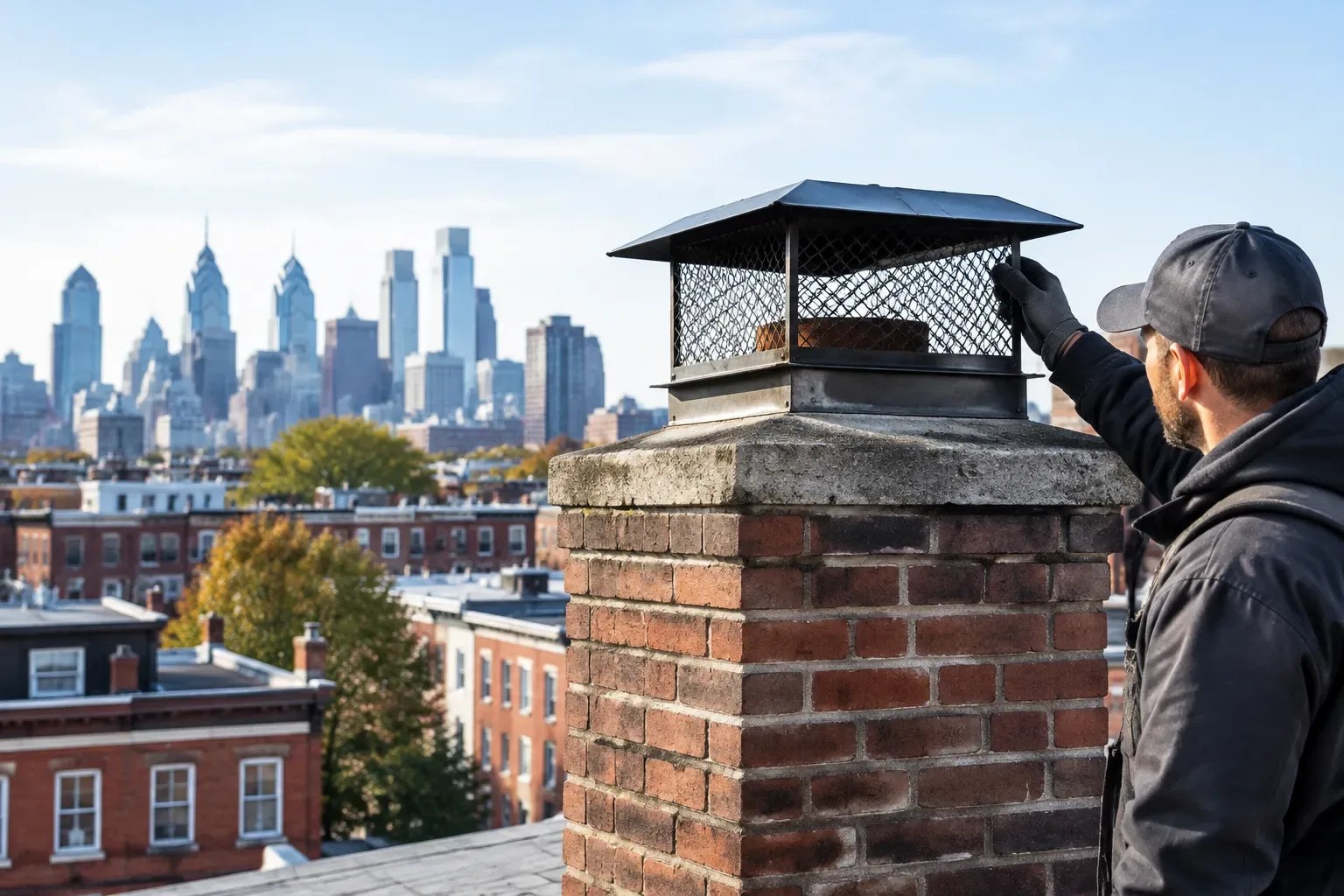
Why Does My Chimney Smoke Back Up on N 12th St?
Smoke backing up into a room usually means the fireplace is not drafting upward as it should. A cold flue, a closed or obstructed damper, soot or debris in the flue, wind-related downdraft, negative indoor air pressure, or a damaged liner can all contribute. The symptom alone cannot confirm which one is responsible.
For homes near N 12th St, closely spaced buildings and rooflines can affect wind pressure around a chimney top. Older masonry components can also need closer evaluation. Stop using the fireplace if smoke repeatedly enters the living space, then arrange a proper diagnosis rather than continuing to relight the fire. Tiptop maintenance provides chimney-focused information and services for Philadelphia property owners.
Quick Answer
A one-time puff of smoke at startup can happen when a cold chimney has not begun moving air upward. Persistent smoke entering the room, smoke from an unused fireplace, or worsening draft points to a problem that needs inspection. Possible findings include a flue blockage, heavy creosote, a damper issue, liner damage, unsuitable termination conditions, or indoor air pressure pulling air down the chimney.
Do not assume chimney cleaning alone will correct every backup. Cleaning can address soot, creosote, or some obstructions, but draft and structural problems may require a different repair.
When is fireplace smoke an emergency?
Leave the home and call emergency services if you suspect a chimney fire. Warning signs can include a roaring sound, dense smoke, sparks or flames at the chimney top, or extreme heat around the fireplace or chimney. The U.S. Fire Administration's chimney fire guidance supports treating these conditions as fire-safety concerns.
For severe, sudden smoke entry without a visible fire, do not keep testing the fireplace. A Philadelphia chimney emergency service may be appropriate when there is suspected damage, a dangerous obstruction, or an urgent safety concern.
What can cause smoke to come back into the house?
The visible symptom is smoke in the room. The cause may be simple, such as a cold flue, or it may involve a condition that can only be confirmed by inspecting the entire venting path.
A cold flue at startup
Cold air in a masonry flue is dense and may resist upward smoke flow when a fire is first lit. If the problem disappears promptly and does not recur, a cold start may be a factor, but repeat incidents still deserve evaluation.
A blockage or buildup in the flue
Creosote, soot, leaves, nesting material, or other debris can restrict the path that smoke needs to follow. A closed, stuck, or defective damper can create a similar symptom.
Downdraft at the chimney top
Wind around nearby rooflines or taller adjacent structures can push air toward the chimney opening instead of allowing smoke to rise. Dense attached-building conditions can make this worth assessing, but they do not prove a downdraft is the cause at a particular property.
Negative pressure inside the home
A range hood, bathroom fan, dryer, HVAC equipment, or a tightly closed home can draw replacement air through the fireplace opening. This can weaken draft or pull smoke into the room.
A liner, masonry, or termination defect
A damaged, undersized, mismatched, or deteriorated liner can disrupt safe venting. Cracked crowns, deteriorated mortar, and cap problems can also allow water or debris to worsen the flue condition.
The relevant technical benchmark for chimneys, fireplaces, and solid-fuel appliances is NFPA 211. A qualified inspection should assess the condition and operation of the specific system, rather than assuming one visible symptom identifies a single defect.
How can I tell a cold-start issue from a recurring draft problem?
Timing is a useful observation, not a final diagnosis. If smoke appears only during the first few minutes of a fire, then clears as the flue warms, cold air in the chimney may be contributing. If smoke continues after the fire is established, appears during certain winds, starts when an exhaust fan runs, or occurs every time you use the fireplace, the issue is more likely to need a full draft and flue assessment.
Older masonry housing in Philadelphia can add other possibilities. Aging mortar, crown damage, flue deterioration, and older liner configurations may affect the path smoke takes. Those conditions need inspection from the firebox to the termination, not a judgment based on the exterior brick alone.
What should I check before arranging an inspection?
Do not climb onto the roof or try to dislodge material inside the flue. You can safely gather a few observations from indoors and from ground level, which can help a technician narrow the diagnostic process.
- Stop using the fireplace if smoke is repeatedly entering the room, and do not add more fuel.
- Confirm that the damper is fully open only if you can do so safely and it is accessible from the firebox.
- Note whether the issue occurs only at startup, throughout the fire, or after a fan, dryer, or HVAC system begins operating.
- From ground level, look for obvious cap displacement, visible masonry damage, or material around the chimney top. Do not attempt a roof inspection yourself.
- Record the fuel type, recent cleaning history, weather and wind conditions, and any unusual odor or alarm activation before scheduling an inspection.
These checks do not replace professional findings. An inspection should examine the firebox, smoke chamber, damper, flue passage, liner, cap, crown, masonry, and termination. For recurring smoke entry, chimney inspection in Philadelphia is the logical next step before selecting a repair.
Will chimney cleaning fix smoke backup?
It can, but only when buildup or an obstruction is the actual cause. Creosote and soot can reduce the open area of a flue, while debris or nesting material can block it more suddenly. In those cases, Philadelphia chimney cleaning can be part of the solution.
Cleaning will not correct every draft failure. It will not change a chimney termination affected by wind, repair a damaged damper, restore failing masonry, or resolve a compromised liner. The common mistake is paying for sweeping without first determining whether the flue is clear and whether the system can draft correctly afterward. For a closer look at pricing factors for routine service, see how much it costs to clean a chimney in Philadelphia.
When might a liner or cap be part of the solution?
A liner directs combustion products through the chimney. If inspection finds that it is damaged, deteriorated, improperly sized for the appliance, or otherwise unsuitable, cleaning alone is not a complete answer. In that situation, chimney liner installation or repair may be discussed after the exact condition is identified.
A cap has a different job. It helps keep rain, debris, and animals out of the flue, but it is not a universal cure for downdraft. A damaged or missing cap can contribute to a blockage problem, while a draft-related termination issue may require a more specific assessment. The right solution depends on what is found, not on the most visible component.
What is the practical next step for smoke backup?
Avoid repeated trial fires. Record the conditions, keep exhaust appliances off while the fireplace is out of service if they seem connected to the symptom, and have the complete system evaluated. A clear finding can distinguish a sweepable obstruction from a pressure, liner, cap, masonry, or termination problem.
If the inspection finds no chimney defect, the source may fall partly outside chimney service, such as a home ventilation, HVAC, or appliance-combustion issue. That is still useful information because it prevents unnecessary chimney work and directs the next evaluation to the right system.
Ready to discuss your project?
If smoke is backing up in your N 12th St home, reach out to discuss an inspection before using the fireplace again.
FAQ
Why is smoke coming down my chimney when I am not using the fireplace?
Wind pressure at the chimney top can sometimes push cold air, odors, or residual soot smell downward. Nearby rooflines and attached buildings may influence that airflow, but an unused-fireplace odor can also point to a damper that is not sealing, moisture-related residue, or a flue condition that needs inspection. Persistent odors, visible soot, or any carbon monoxide alarm should not be ignored.
Can a blocked chimney cause smoke to back up?
Yes. Creosote, soot, animal nesting material, leaves, or other debris can narrow or block the flue and force smoke toward the room. A damper that is closed or not opening fully can produce a similar result. Only an inspection can distinguish a blockage from a draft, liner, or pressure issue, so do not try to push material upward from the firebox.
Why does my fireplace smoke only when I first light it?
A cold masonry flue may initially contain heavy cold air that resists upward flow. A small amount of startup smoke that resolves quickly can be consistent with that condition. If it happens often, lasts beyond startup, or worsens with certain wind conditions, do not assume it is normal. A draft evaluation can identify whether another restriction or termination issue is involved.
Can a bathroom fan or dryer make my fireplace smoke?
Yes, either can contribute to negative indoor pressure. Exhaust equipment removes indoor air, and replacement air may be pulled down an available chimney path if the fireplace is open or the draft is weak. Try not to operate a fireplace while powerful exhaust devices are running until the issue has been assessed. HVAC operation can also influence room pressure and should be noted during diagnosis.
Should I keep using my fireplace if smoke enters the room?
No. Stop adding fuel and do not continue lighting fires to see if the issue improves. Ventilate only if it is safe to do so, move people away from smoke, and leave immediately for a suspected chimney fire or carbon monoxide alarm. For a non-emergency recurring issue, arrange an inspection before using the fireplace again.
Does a chimney cap stop downdrafts?
A cap can help keep rain, leaves, and animals out of the flue, which may prevent obstruction-related smoke problems. It does not automatically solve wind-driven downdrafts or an incorrectly performing termination. The cap design, chimney height, nearby roof conditions, flue condition, and appliance all matter. An inspection should identify the cause before a cap repair or replacement is selected.
Can an old chimney liner cause smoke in the house?
It can contribute if the liner is cracked, deteriorated, disconnected, improperly sized, or otherwise unsuitable for the appliance. The symptom does not prove a liner issue because blockage and indoor pressure can look similar from the room. A technician needs to inspect the liner and flue path before recommending repair. This is especially relevant where older masonry systems have not been evaluated recently.
Is smoke backing up the same as an air duct problem?
Usually, no. Smoke from a fireplace is primarily a chimney draft and combustion-venting issue. However, a home's air-moving systems can influence pressure and make chimney draft worse. If HVAC operation appears connected to the symptom, that may warrant evaluation of both systems. For separate duct concerns, review whether air duct cleaning is necessary in Philadelphia.