
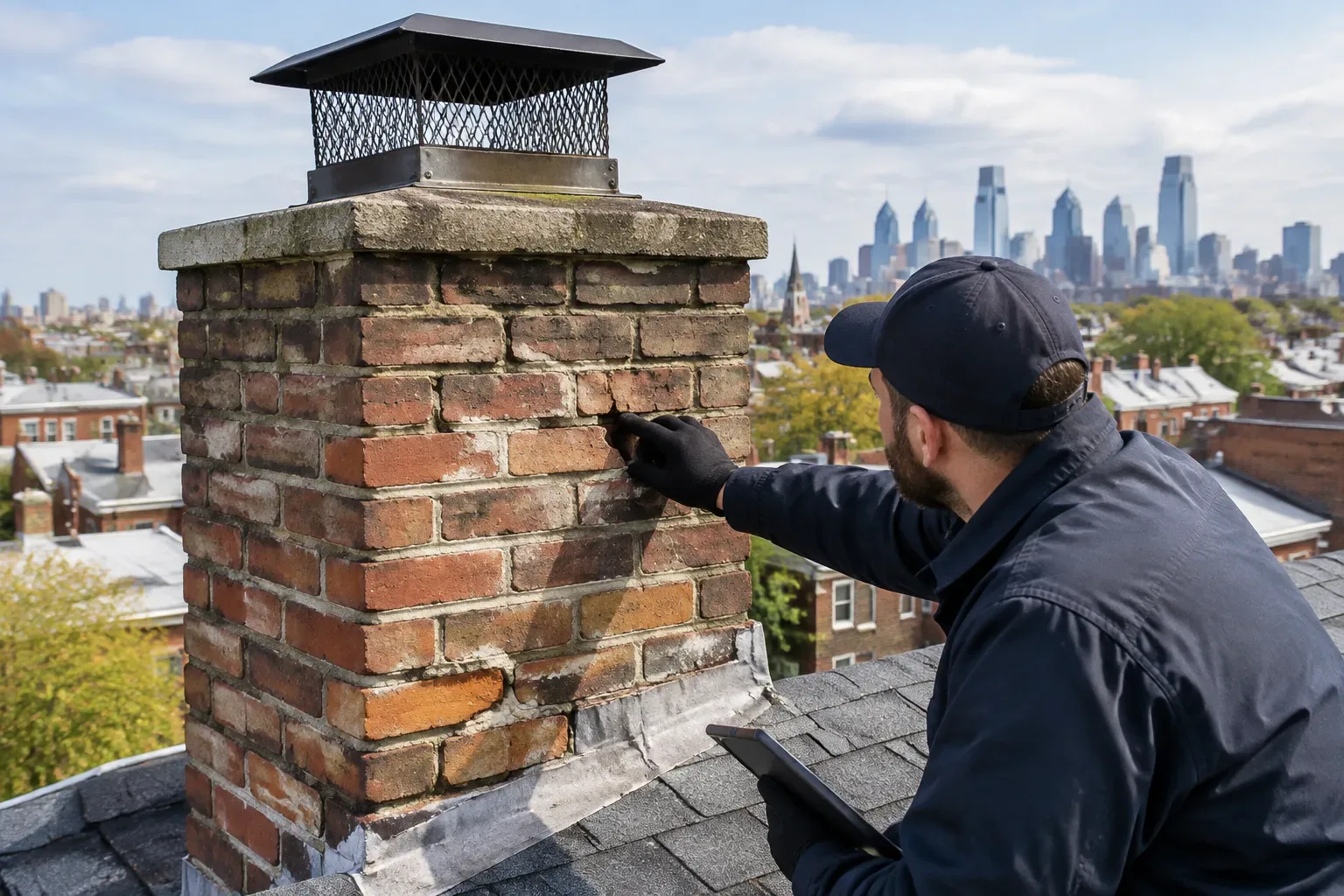
Can Masonry Repair Stop a Chimney Leak on W Olney Ave?
Yes, masonry repair can stop a chimney leak if damaged mortar joints, cracked bricks, or open cracks in the chimney structure are the actual path letting water in. It will not solve every leak. A failed crown, loose cap, roof flashing problem, or nearby roof defect can send water into the same area even when the brickwork looks sound.
For a property on or near W Olney Ave, the sensible next step is to identify the entry point before choosing a repair. Tiptop maintenance provides chimney-focused information and services in Philadelphia, but a site-specific inspection is what separates a targeted repair from an expensive guess.
Quick Answer
Repointing, selective brick replacement, and crack repair may stop water intrusion when the chimney's vertical masonry is deteriorated. Masonry work alone is not the right fix when water enters through the crown, cap, flashing, or roof around the chimney.
A leak should be evaluated component by component. The Chimney Safety Institute of America explains that chimney leaks can come from multiple areas, including masonry, crowns, and flashing. An interior stain is a symptom, not proof of which component failed.
What signs suggest the masonry may be admitting water?
Look for clues that are visible from the ground or inside the home. Crumbling or recessed mortar, missing mortar between bricks, cracked faces, flaking brick surfaces, and open gaps can all allow rain to enter the chimney structure. Spalling means the brick face is breaking away, which can happen after moisture enters and freeze-thaw cycles expand it.
Inside, dampness or staining near the fireplace wall, chimney breast, or upper ceiling may occur after rain or melting snow. Those observations help document a pattern, but they do not confirm the route water took. In closely spaced or attached Philadelphia housing, water can travel along roof transitions, concealed masonry, or flashing before it becomes visible indoors.
Which chimney component is most likely to be leaking?
Several components can produce similar indoor symptoms. A proper diagnosis distinguishes what you notice from what an inspection can confirm.
| Possible entry point | What you may notice | What an inspection needs to confirm | Typical repair direction |
|---|---|---|---|
| Mortar joints or brick | Recessed mortar, cracks, loose fragments, damp chimney wall | Whether deterioration is localized, deep, or structural | Repointing, crack repair, or selective brick replacement |
| Chimney crown | Cracks at the top of the stack or water after storms | Crown slope, cracks, edges, and condition around flue openings | Crown repair or replacement |
| Flashing at the roofline | Staining near the ceiling or roof intersection | Condition of step flashing, counterflashing, and surrounding roofing | Flashing and possibly roof repair |
| Chimney cap | Rain entering the firebox, debris, or an exposed flue opening | Whether the cap is missing, loose, damaged, or poorly fitted | Cap repair or replacement |
| Roof covering nearby | Leak symptoms that appear close to, but not necessarily from, the chimney | Whether shingles, membranes, or roof transitions have failed | Roofing repair by the appropriate professional |
A chimney crown is the sloped top surface that sheds water away from the stack. If it is cracked, poorly sloped, or open around the flue, water can enter from above despite intact walls. Review chimney crown repair in Philadelphia when the top of the stack is the suspected issue.
When will repointing stop a chimney leak?
Repointing removes failed mortar from joints and installs new mortar. It can stop a leak when water is entering through deteriorated joints and the surrounding brick remains sound enough to retain. It is especially useful for localized weathering rather than a chimney that has widespread instability or badly damaged units.
Older masonry deserves careful material assessment. Mortar that is too hard or otherwise incompatible with softer, weathered brick can contribute to future damage. In cold weather, water trapped in open joints or porous brick can freeze and expand, worsening cracks and spalling. That is why a durable repair addresses both the damaged joint and the reason water was able to enter.
When is masonry repair not enough?
Surface waterproofing is not a substitute for repairing active cracks, failed joints, loose brick, or a defective crown. A water-repellent treatment may be considered only after the masonry is sound and after the actual entry point is addressed. It should not be presented as a cure for a structural masonry problem.
Likewise, a chimney cap serves a different purpose from mortar repair. A cap can help keep direct rain, leaves, and animals out of the flue opening, while masonry repair restores the outer stack. If the flue opening is exposed or the cap is compromised, chimney cap repair in Philadelphia is the more relevant scope to discuss.
The common mistake is repairing the most visible defect without verifying the path of the water. That can leave the leak active, allow moisture to continue affecting masonry, and make later diagnosis harder.
How should a chimney leak be diagnosed before repair?
The goal is not simply to find a stain. It is to compare the timing of the leak, visible exterior conditions, roof intersections, and the chimney's top components. A chimney inspection in Philadelphia can establish what is confirmed and what still needs evaluation by a roofing professional.
- Record when the moisture appears, including rain, wind direction, snowmelt, or dry-weather conditions.
- Photograph interior staining, damp areas, and any exterior damage visible safely from the ground.
- Note whether water appears in the firebox, on a wall, near a ceiling, or at a roofline.
- Ask for an inspection that reviews mortar, brick, crown, cap, flashing, flue area, and adjacent roofing rather than examining one item alone.
- Request a repair recommendation tied to the documented entry point and the condition of affected materials.
A professional finding may reveal that the chimney is not the source at all. A roof leak, plumbing issue, condensation concern, or another building condition can create moisture in a similar location. In that situation, the appropriate repair may be outside the chimney service scope.
When should a leaking chimney be treated as urgent?
Prompt assessment is sensible whenever water is actively entering the home, but some conditions call for faster attention. Falling brick or mortar, a visibly leaning stack, large open cracks, rapidly expanding interior damage, or water near electrical equipment should not wait for routine maintenance planning. Avoid using the fireplace until a qualified professional has evaluated any condition that may affect safe operation.
For active chimney-related water intrusion or visible instability, review the available 24/7 chimney emergency service in Philadelphia. Emergency protection may reduce immediate exposure, but it does not replace a full diagnosis and permanent repair plan.
What should you ask before approving chimney masonry work?
A clear proposal should identify more than a general statement that the chimney is leaking. Ask these practical questions:
- What specific entry point was observed, and what evidence supports that conclusion?
- Are the bricks sound, or do any need replacement in addition to repointing?
- Were the crown, cap, flashing, and nearby roof area checked?
- What mortar and repair approach are appropriate for the existing masonry?
- Is waterproofing being proposed after repairs, and what defect would it address?
- Does the inspection show a reason to involve a roofing professional or evaluate interior moisture damage?
Repair cost cannot be responsibly estimated from a street name or an indoor stain. Access, chimney height, roof pitch, the amount of repointing, needed brick replacement, crown or flashing work, and hidden damage can all change the scope. For a separate overview of maintenance pricing, see how much chimney cleaning can cost in Philadelphia, while keeping in mind that cleaning and masonry repair are different services.
What is the practical takeaway for W Olney Ave property owners?
Masonry repair can be the right answer when inspection confirms water is entering through failed mortar, cracked brick, or open masonry defects. The best repair is the narrowest one that actually fixes the verified path, whether that is repointing, brick replacement, crown work, cap work, flashing repair, or a roofing repair outside the chimney itself.
Ready to discuss your project?
For a W Olney Ave chimney leak, reach out to discuss an inspection that identifies the water-entry path before masonry work is planned.
FAQ
Can cracked mortar joints really cause a chimney leak?
Yes. Missing, cracked, or eroded mortar can create routes for water to enter the chimney wall. That does not mean every crack is the sole cause of indoor moisture. The crown, flashing, cap, and adjacent roofing still need to be checked because several defects can exist at the same time. A finding that connects the damaged joints to the water path is the basis for deciding whether repointing is appropriate.
Will waterproofing stop a leaking brick chimney?
Waterproofing may help manage moisture absorption after sound repairs are complete, but it should not replace repairs to open joints, cracked bricks, or unstable masonry. It also cannot correct failed flashing, a damaged crown, or a missing cap. Before approving a coating, ask what active defect has been repaired first and whether the masonry can properly shed water.
Why does my chimney leak only during heavy rain?
Wind-driven rain can force water into openings that remain dry during a light shower. Heavy rain can also overwhelm a weak crown edge, flashing transition, or roof detail. The pattern is useful evidence, especially if you record wind and rainfall conditions, but it does not identify the exact cause by itself. Water may travel before it appears on an interior surface.
Can a chimney leak come from flashing even if the bricks look fine?
Yes. Flashing seals the intersection between the roof and chimney, so failure there can allow water into the roof assembly while the masonry appears intact. Step flashing, counterflashing, and the surrounding roof covering all deserve inspection. If flashing is confirmed as the source, repointing the wall alone is unlikely to stop the leak.
Does water in the fireplace mean I need a new chimney cap?
A damaged or missing cap is one possible explanation, since it can allow direct rain into the flue. Water can also enter through crown cracks, failed mortar around the flue, or other upper-chimney defects. A cap should be evaluated, but the firebox symptom does not prove that cap replacement alone is the complete repair.
When does a chimney need rebuilding instead of repointing?
Repointing is for failed joints where the chimney remains sufficiently sound. Rebuilding may be considered when brick is extensively damaged, sections are unstable, the stack is leaning, or deterioration reaches beyond localized surface repairs. That decision requires an in-person assessment of the chimney's condition, access needs, and any related structural concerns. It should not be based only on visible staining indoors.
Should I have the chimney cleaned while investigating a leak?
Cleaning and leak diagnosis address different needs, though both may be relevant to a working fireplace or appliance venting system. Cleaning removes soot and creosote-related buildup; it does not repair masonry or flashing. If the chimney is used, a service professional can advise whether cleaning should be coordinated with the inspection. Avoid operating the fireplace if water damage or safety concerns are present.
Can I inspect a chimney leak from inside the attic?
You may safely observe and document visible moisture, staining, or wet insulation from an accessible area, but do not disturb damaged materials or assume the nearest wet spot marks the entry point. Water can travel along framing or roof layers. A qualified inspection should assess the chimney exterior, roof transition, and interior evidence together before a repair scope is selected.