
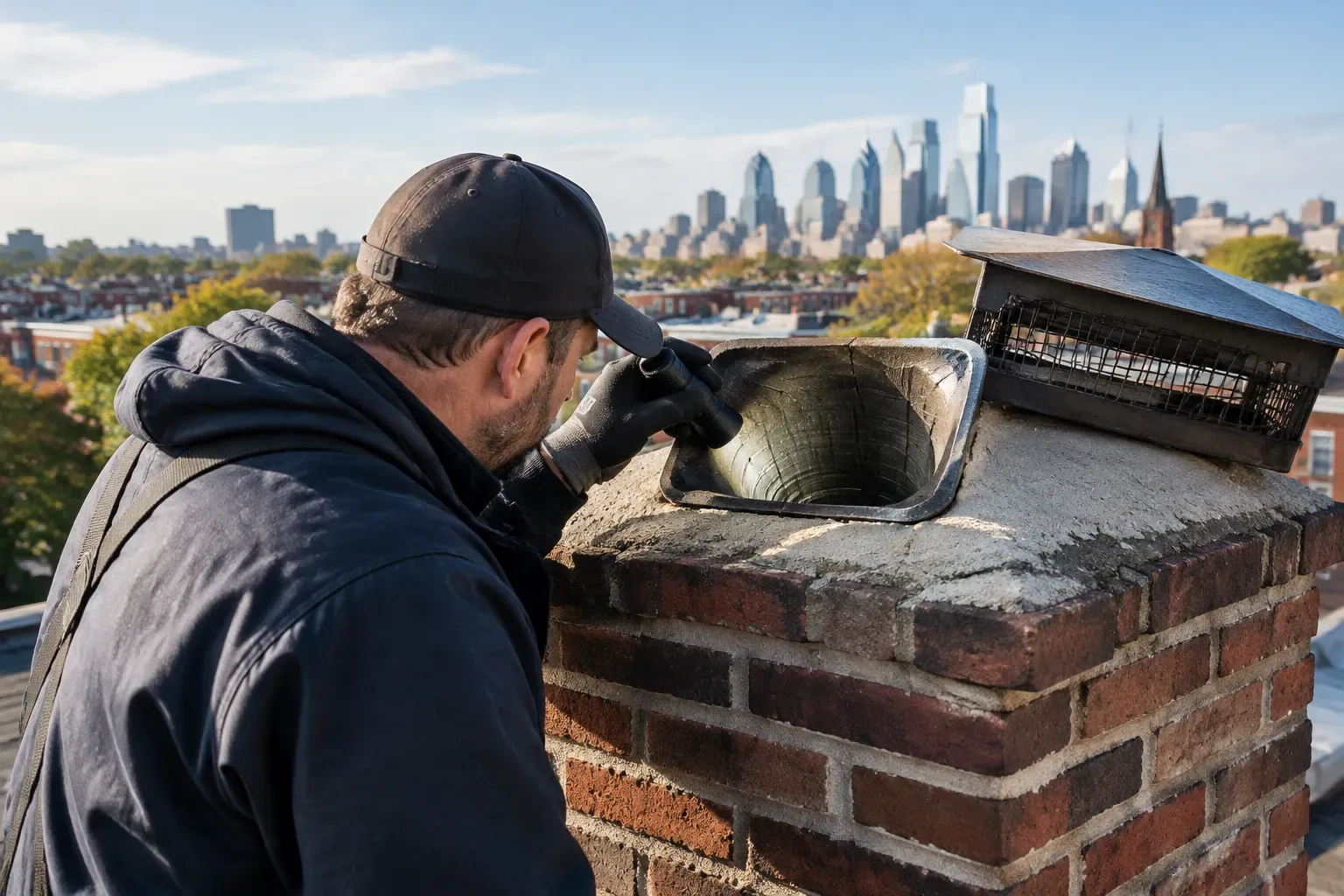
Can a Damaged Flue Liner Cause Carbon Monoxide Risk on N Front St?
Yes. A damaged flue liner can create a carbon monoxide risk if combustion gases escape the intended venting path or if the damage contributes to poor draft and gas spillage. It does not mean every crack automatically puts carbon monoxide into living space, but it does mean the fireplace, furnace, boiler, water heater, and the full venting route need careful evaluation.
For a property on N Front St, treat this as a property-specific safety question, not a street-wide condition. If a carbon monoxide alarm sounds or anyone has possible exposure symptoms, leave first and seek emergency help. Do not stay inside to inspect the chimney.
Quick Answer
A liner is the protective passage inside a chimney that directs smoke or combustion gases outdoors. Cracks, gaps, deterioration, improper sizing, or a disconnected section can allow gases to leave that passage or interfere with draft. Because carbon monoxide is colorless and odorless, a working alarm and a professional inspection are more reliable than smell, smoke, or symptoms alone.
Tiptop maintenance provides Philadelphia-focused chimney content, but a cleaning visit alone should not be assumed to confirm that a concealed liner is sound from top to bottom.
How can a damaged liner let carbon monoxide enter a home?
Fuel-burning appliances produce combustion gases. The chimney or vent is supposed to contain those gases and carry them outside. A compromised liner can create openings along that route, while a restricted, poorly drafting, or incorrectly connected flue can allow gases to spill back near the appliance instead.
Carbon monoxide is a poisonous, colorless, odorless gas associated with fuel-burning equipment, as explained by the U.S. Environmental Protection Agency's carbon monoxide guidance. A damaged liner is one possible cause of an unsafe condition, not the only one. A blockage, failed appliance component, inadequate combustion air, vent connection problem, or pressure imbalance in the building can also contribute.
Older masonry chimneys deserve particular care in Philadelphia. Mortar can deteriorate, a liner may have been altered or omitted, or a later-installed heating appliance may not match the existing flue setup. In attached or multifamily buildings, shared masonry or inaccessible runs can make it especially important to confirm exactly which appliance uses which flue.
Which appliances can be affected by a chimney liner problem?
A fireplace is not the only possible source. The appliance type, fuel, and vent arrangement determine what should be examined.
| Appliance or system | Observable warning that merits attention | What an inspection needs to confirm |
|---|---|---|
| Wood-burning fireplace or stove | Smoke entering the room, unusual odor, poor draft, or soot around the opening | Whether the flue is open, continuous, appropriately sized, and free of defects or obstructions |
| Gas fireplace | Persistent pilot or burner concerns, unusual condensation, or a CO alarm event | The appliance venting path, connections, draft, and liner condition |
| Furnace, boiler, or water heater vented through a chimney | Moisture around the vent, soot, vent disconnection, or combustion-gas odor | Which flue serves the equipment, whether gases draft correctly, and whether the liner suits that venting arrangement |
Do not assume a visible fireplace is the source just because it is the obvious chimney feature. During cold-season heating use, furnaces, boilers, water heaters, and fireplaces may operate more often, making an intact, open vent path more consequential.
What signs point to a possible venting problem?
Symptoms are clues, not diagnoses. A headache, dizziness, weakness, nausea, confusion, chest pain, or unusual fatigue can occur with carbon monoxide exposure, but those symptoms may also have medical causes unrelated to the building. The CDC's carbon monoxide information advises treating suspected exposure seriously and getting emergency help.
Other observable warning signs can include:
- A CO alarm sounding or repeatedly indicating a problem.
- Smoke or combustion odors entering a room during appliance use.
- Soot staining near a fireplace opening or fuel-burning appliance.
- A damaged, loose, corroded, or disconnected visible vent section.
- Water staining, crumbling masonry, or debris in the firebox, which can signal a chimney condition worth investigating but do not prove liner damage.
- A fuel-burning appliance that shuts down, burns irregularly, or appears to spill exhaust into the room.
What should you do if you suspect a damaged flue liner?
Safety comes before diagnosis. Stop using the suspected fireplace or fuel-burning appliance until a qualified evaluation determines it can operate safely. If there is no alarm event or acute exposure concern, document what you noticed, such as the appliance involved, timing, and visible conditions, without disassembling venting parts.
- If a CO alarm sounds or anyone may be exposed, leave the building immediately and contact emergency responders or the fuel utility according to local guidance.
- If there is no active emergency, stop using the appliance connected to the suspected flue until it has been evaluated.
- Check that CO alarms are installed and functioning according to the manufacturer's instructions. The U.S. Consumer Product Safety Commission recommends CO alarms as part of household CO safety.
- Arrange an inspection that identifies the appliance served, examines the accessible venting path, and explains whether further diagnostic work is needed.
- Ask for the finding in clear terms: the location and type of defect, whether use should remain stopped, and what repair or relining scope is appropriate.
If there is a current chimney-related safety concern that requires prompt assessment, review the available 24/7 chimney emergency service information. An emergency response is appropriate for a suspected immediate hazard, not as a substitute for emergency services during a CO alarm event.
Can chimney cleaning find a cracked liner?
Sometimes, but not always. Cleaning can remove soot, creosote, and debris that may obscure portions of a flue. It is useful maintenance, especially for solid-fuel systems, but it does not automatically establish that the full liner is intact or correctly sized.
A basic visual check may miss hidden cracks, separated joints, deterioration behind a bend, or inaccessible sections. Depending on the system and the initial findings, a complete evaluation may require examination of the whole flue, a camera scan, draft assessment, or appliance-specific testing. The Chimney Safety Institute of America notes the importance of chimney and venting-system inspection and maintenance for safe operation.
For service pathways and next-step information, see the site's chimney service details. The right scope should follow the finding. Cleaning may be enough for deposits only, while a confirmed liner defect may call for repair, relining, or a different correction based on the appliance and vent configuration.
When does a liner need repair, relining, or another solution?
There is no responsible one-size-fits-all answer. The appropriate correction depends on liner material, the size and location of the defect, the appliance it serves, flue dimensions, accessibility, and applicable installation requirements. A small visible concern should not automatically lead to a full replacement, and a superficial patch should not be accepted when the defect compromises safe venting.
The common mistake is treating a liner issue as only a cleaning problem. Creosote removal addresses combustible deposits and may improve flue cleanliness. It does not seal a cracked liner, reconnect a vent, correct an incompatible appliance connection, or prove that combustion gases are leaving safely.
How do carbon monoxide alarms fit into chimney safety?
CO alarms are an essential warning layer, not proof that the chimney system is safe. Install and replace them according to the manufacturer’s instructions, with coverage on every level and outside sleeping areas as applicable to the alarm guidance and home layout. Never disable an alarm because it seems inconvenient or because an appliance appears to be operating normally.
A cleared alarm reading after ventilation also does not identify the source. The cause could involve the chimney, a furnace, boiler, water heater, gas fireplace, attached-garage vehicle exhaust, or another fuel-burning source. That distinction matters because a chimney professional may need to coordinate with an appliance technician or fuel utility when the evidence points beyond the flue.
What should you ask after a chimney or vent inspection?
Leave the appointment with answers that connect the finding to a decision. Ask which appliance each inspected flue serves, what area was actually examined, whether the liner was fully visible, and whether a camera scan or additional diagnostic work is recommended.
Also ask whether the appliance should remain out of service, whether the issue is a liner defect versus a blockage or appliance problem, and what correction is recommended before use resumes. For broader questions about maintenance pricing rather than a defect-specific repair scope, the guide to chimney cleaning costs in Philadelphia can help separate routine cleaning from inspection or repair work.
The practical takeaway is simple: a suspected liner defect should lead to a targeted safety evaluation, not guesswork. Keep CO alarms working, stop using a potentially affected appliance when a concern appears, and base any repair decision on the condition of the actual flue and appliance connection.
Ready to discuss your project?
If a flue or CO concern has you unsure which appliance is affected, request a focused chimney evaluation for your Philadelphia property.
FAQ
Can a cracked chimney liner cause carbon monoxide poisoning?
It can contribute to a dangerous carbon monoxide situation if the crack allows combustion gases to escape the flue or disrupts proper venting. A crack alone does not prove exposure occurred, because risk also depends on the appliance, draft, vent connections, and whether gases can reach occupied space. Treat a confirmed crack as a reason to stop using the affected appliance until the system is evaluated.
What does carbon monoxide from a chimney smell like?
Carbon monoxide has no smell, color, or taste. Smoke, exhaust-like odors, or combustion odors can signal other venting concerns, but their absence does not mean the air is safe. Use working CO alarms rather than smell as the warning method. If an alarm sounds, leave the building and seek appropriate emergency assistance instead of trying to locate the source yourself.
Can a furnace use the same chimney as a fireplace?
Some buildings have more than one flue within one chimney structure, and some heating equipment may vent through a masonry chimney. The visible fireplace opening does not show the full vent arrangement. In older or altered buildings, an inspection should identify which appliance connects to which flue and whether the arrangement is intact and appropriate for current equipment.
Do I need a chimney inspection if my carbon monoxide alarm never goes off?
A silent alarm is reassuring but does not verify liner condition. Consider an inspection if you see masonry deterioration, notice smoke spillage, have an appliance venting concern, or do not know the condition of the flue. Regular maintenance can also help identify visible issues. For cleaning-specific warning signs, see this guide on signs a chimney needs cleaning.
Is chimney cleaning the same as chimney liner repair?
No. Cleaning removes deposits and debris. Liner repair addresses physical defects or venting deficiencies discovered during an evaluation. A system may need one, both, or neither, depending on the finding. Do not authorize a repair based only on an assumed diagnosis, and do not assume a clean flue has a safe, intact liner.
Could an air duct issue cause the same symptoms as a chimney problem?
Indoor discomfort or odors can have multiple causes, but air ducts do not produce carbon monoxide. CO comes from combustion sources or other exposure pathways. Ductwork may affect air distribution, while a fuel-burning appliance or venting system needs separate investigation when CO is suspected. For non-CO questions about duct maintenance, read whether air duct cleaning is necessary in Philadelphia.
Should I turn off my gas fireplace if I see soot?
Soot can be a warning worth evaluating, particularly if it is new, excessive, or accompanied by odors, alarm activity, or unusual flame behavior. It does not identify the exact cause by itself. Stop using the fireplace if there is a safety concern and have the fireplace, venting path, and appliance operation assessed rather than continuing to test it.
How can I tell if the issue is my chimney or my appliance?
You usually cannot determine that reliably from one symptom. A professional finding may involve the liner, a blockage, draft conditions, a vent connection, or an appliance combustion problem. Ask the evaluator to identify the appliance served by the flue and explain what was tested or observed. If the issue appears appliance-side, a qualified appliance or HVAC professional may be needed as well.