
When Should a Chimney Liner Be Replaced on Fisher Ave?
A chimney liner should be replaced when an inspection finds cracks, missing or shifted clay tiles, corrosion perforations, failed seams, major deformation, improper sizing for the connected appliance, or other defects that prevent the flue from safely containing combustion gases. Age by itself is not enough to justify replacement. The liner material, appliance type, fuel, moisture exposure, and actual condition matter more.
For a home on or near Fisher Ave in Philadelphia, the right next step is usually a liner-focused inspection, particularly after a chimney fire, water intrusion, a furnace or fireplace replacement, or visible draft and odor problems. Tiptop maintenance provides chimney-focused services in Philadelphia, but the specific flue, appliance connection, and surrounding masonry must be assessed before deciding between repair, relining, or replacement.
Quick Answer
Replace a chimney liner when it is no longer intact, correctly sized, compatible with the appliance, or capable of keeping smoke and combustion byproducts inside the flue. A minor issue outside the liner, such as a damaged cap or isolated masonry joint, may not require a new liner. A camera inspection helps separate those situations.
Do not use a fireplace, furnace, boiler, or other appliance connected to a flue suspected of being unsafe until it has been evaluated. If a carbon-monoxide alarm activates, treat it as an immediate safety issue and follow the alarm instructions rather than assuming the chimney is the only possible cause.
Which signs mean a chimney liner may need replacement?
Some warning signs are visible in the living space or around the chimney. They point to a problem worth investigating, but no single symptom proves that the liner is at fault. An inspection is needed to identify the cause.
- Smoke, soot, or combustion odors entering a room can indicate draft or containment trouble. Blockage, appliance malfunction, a leaking connection, or wind-related draft issues can also contribute.
- Slow draft, difficult fireplace startup, or recurring smoke spillage may reflect an obstruction, liner damage, an incorrectly sized flue, or another venting issue.
- White staining, damp patches, or deteriorating masonry can indicate water movement. The source may be a crown, flashing, cap, exterior masonry, or condensation inside the flue.
- Rust flakes, staining, or moisture around a furnace or fireplace vent connection may signal corrosion, though the appliance and connector also need evaluation.
- A past chimney fire, suspected flue fire, major water event, or appliance conversion calls for a closer assessment even if the system appears normal afterward.
A professional finding that commonly supports replacement is a liner with gaps, fractured tiles, severe corrosion, perforations, displaced sections, or dimensions that do not suit the connected appliance. The relevant safety framework includes NFPA 211, which addresses chimneys, fireplaces, vents, and solid-fuel-burning appliances.
What can a camera inspection confirm that a sweep cannot?
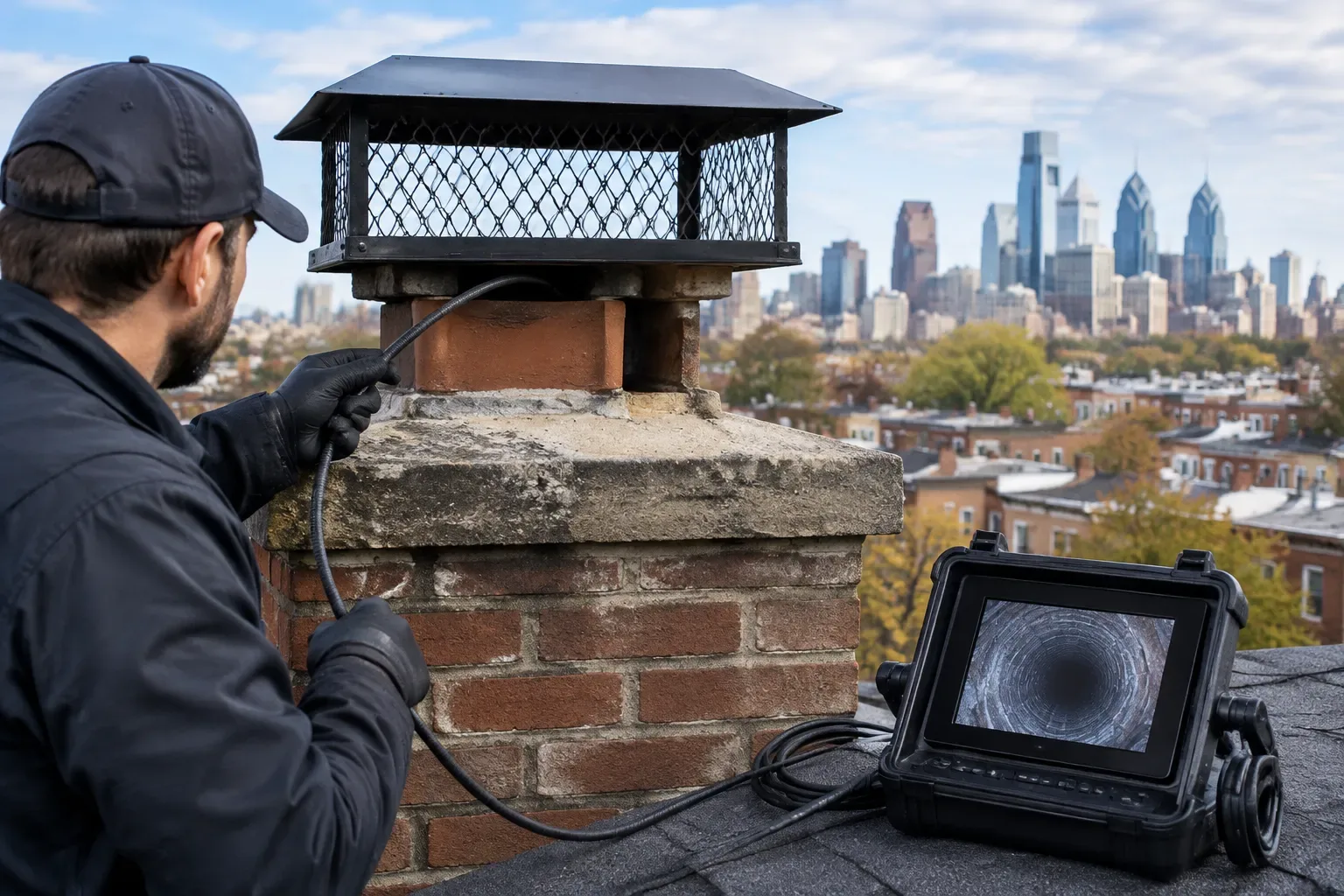
The useful question is not simply, “Was the chimney cleaned?” It is, “Can the full path from appliance connection to chimney top be evaluated?” A liner inspection may include video scanning to look for internal cracking, tile displacement, corrosion, joints, obstructions, previous repairs, and abandoned openings.
The Chimney Safety Institute of America explains that a chimney inspection is appropriate when conditions change or hazards are suspected. For a property with multiple flues or past appliance changes, the inspector should also verify which appliance uses which flue. That distinction matters because a neighboring flue can look similar while serving a different system.
For a closer assessment of the venting system and chimney condition, review the scope of a professional chimney inspection in Philadelphia. A useful inspection report should identify the liner material, observable condition, flue dimensions, connected appliance, fuel type, and any related water-management or masonry concerns.
Is repair enough, or does the liner need full replacement?
Replacement is not always the first or only answer. The decision depends on the location and severity of the defect, whether the liner remains continuous, and whether the flue fits the appliance it serves.
| Condition found during inspection | May repair be possible? | When replacement becomes more likely |
|---|---|---|
| Isolated exterior masonry or crown damage | Yes, if the liner is intact | Water damage has also cracked, displaced, or compromised the liner |
| Small, localized issue at a connection | Sometimes, after evaluating the connector and appliance | The defect creates leakage, cannot be safely corrected, or reflects broader liner failure |
| Cracked or shifted clay flue tiles | Limited remediation may be possible in select cases | Cracks are extensive, tiles are missing or displaced, or the flue cannot safely contain combustion byproducts |
| Corroded stainless-steel liner | Minor surrounding issues may be addressed | Corrosion has perforated the metal, seams have failed, or the liner is deformed or incompatible |
| Improperly sized or incompatible liner | No surface repair solves sizing | A new appliance, fuel change, or venting calculation shows the current liner is unsuitable |
A liner can be damaged while the chimney masonry also needs work. Wet winter conditions, freezing and thawing, and water entry can affect crowns, flashing, and exterior masonry, then accelerate deterioration around the flue system. If the inspection finds both internal and exterior defects, chimney repair in Philadelphia may need to address the cause as well as the liner result.
Does the liner material change the replacement decision?
Yes. Clay tile, stainless steel, and cast-in-place systems fail in different ways, so the inspection looks for different evidence. The replacement material also has to be compatible with the fuel and appliance being vented.
Clay tile liner
Cracked, missing, shifted, or heavily deteriorated tiles can leave gaps in the flue. Camera access is especially helpful because much of the damage may be out of sight.
Stainless-steel liner
Look for corrosion, pinholes, failed seams, crushing, deformation, or an incorrect diameter. Moisture and incompatible appliance conditions can contribute to deterioration.
Cast-in-place liner
Major cracking, separation, obstruction, or loss of gas-tight integrity requires professional evaluation. The decision may involve remediation or replacement based on the system's condition.
A new furnace, boiler, fireplace insert, or fuel change can alter flue temperatures, moisture behavior, draft, and sizing requirements. A liner that worked with an old appliance may not be appropriate for the replacement equipment. This is why a liner decision should not be based on material age alone.
What should you do after spotting a possible liner problem?
Start with safety and preserve the information a professional will need. Avoid trying to patch or inspect deep inside a flue yourself, where hidden damage and soot exposure can create additional risks.
- Stop using the appliance if there is smoke entering the room, a strong combustion odor, suspected flue damage, or a carbon-monoxide alarm activation.
- Note what you observed, including when it occurs, which appliance was operating, recent water intrusion, and any changes to the heating system.
- Arrange an inspection that specifically evaluates the liner, appliance connection, flue size, obstructions, and chimney exterior.
- Ask for the finding behind the recommendation: the defect location, liner material, severity, and why repair would or would not be suitable.
- Address related water-entry or masonry defects so a replacement liner is not exposed to the same unresolved conditions.
If there has been a suspected chimney fire, severe visible damage, or an active venting concern, use the information available through 24/7 chimney emergency services in Philadelphia to determine an appropriate next step.
Do Philadelphia permit requirements affect liner replacement?
They can. Requirements may vary with the appliance, fuel, project scope, building conditions, and current city rules. Do not assume every liner project has the same permit or inspection path. Confirm project-specific obligations with the installing professional and the Philadelphia Department of Licenses and Inspections.
That verification is especially worthwhile when a project includes an appliance replacement, a new vent connection, structural chimney work, or changes to how a flue is used. It helps prevent the common mistake of treating a liner as a standalone tube rather than part of a complete venting system.
What should you ask before approving liner work?
Ask for a clear explanation in plain language. A sound recommendation should connect the observed defect to the proposed scope rather than relying only on a liner's age or a vague statement that it “looks old.”
Questions worth asking include:
- What liner material is present, and what specific defect was found?
- Was the entire flue camera-scanned?
- Which appliance connects to this flue, and is the liner sized and compatible for it?
- Is there evidence of water entry, condensation, crown damage, flashing failure, or masonry deterioration?
- Can the identified issue be repaired safely, or is replacement necessary? Why?
- Does the proposed work include correction of the underlying condition that caused the damage?
For information focused on liner-specific options, see chimney liner installation and repair in Philadelphia. The practical takeaway is simple: approve replacement based on documented condition and appliance compatibility, not on an arbitrary replacement interval.
Ready to discuss your project?
Arrange a liner-focused chimney inspection for a Fisher Ave property before deciding whether repair or replacement is appropriate.
FAQ
How do I know if my clay chimney liner is cracked?
You usually cannot confirm a cracked clay liner from the fireplace opening alone. Smoke odors, draft problems, loose tile fragments, or unexplained staining can justify an inspection, but they do not prove a crack. A camera scan can reveal fractured, shifted, or missing tiles deeper in the flue. Avoid using the connected appliance if damage is suspected until the flue is assessed.
Can I use my fireplace if the liner might be damaged?
It is safer not to use a fireplace or any appliance connected to a suspected unsafe flue until a qualified inspection is completed. A damaged liner may allow heat, smoke, or combustion byproducts to escape where they do not belong. The problem could also involve blockage, the appliance connection, or another venting component, which is why a visual guess is not enough.
Does an old chimney automatically need a new liner?
No. Older Philadelphia homes can have clay-tile, unlined, relined, or altered flues, but the actual configuration has to be verified. A liner's condition, sizing, fuel compatibility, maintenance history, and water exposure are more meaningful than its apparent age. Regular chimney cleaning in Philadelphia can help identify buildup and visible concerns, but it is not a substitute for a liner-focused assessment.
Should a liner be checked after replacing a furnace or boiler?
Yes. A replacement appliance can change venting temperatures, moisture production, draft, and the appropriate liner size or material. The existing flue may be sound yet still unsuitable for the new equipment. Before connecting a new appliance, have the venting route evaluated as a complete system, including the appliance connector and chimney liner.
What is the difference between chimney relining and chimney repair?
Relining addresses the interior flue passage, often by installing or restoring a liner that safely contains combustion byproducts. Chimney repair can involve many other components, such as masonry, flashing, crowns, caps, or appliance connections. Some projects need both because water intrusion or exterior deterioration may have contributed to the liner issue.
Can water damage ruin a chimney liner?
Water can contribute to liner-related problems, especially when it enters through a failing crown, cap, flashing area, or damaged masonry. It may worsen clay-tile cracking, promote corrosion in metal components, and contribute to condensation-related deterioration. The inspection should identify the water path, because replacing a liner without correcting water entry can leave the new system exposed to the same conditions.
How much does chimney liner replacement cost in Philadelphia?
There is no reliable single figure without knowing the flue height, liner material, appliance, access, chimney condition, and whether related repairs are necessary. Ask for a scope that separates inspection findings, liner work, and any masonry or water-management repairs. For a related maintenance-cost perspective, see how much it costs to clean a chimney in Philadelphia, while keeping in mind that cleaning and liner replacement are different scopes of work.
Can a carbon-monoxide alarm mean the chimney liner is bad?
A carbon-monoxide alarm should never be treated as proof of one specific defect. It can indicate a problem with a chimney liner, appliance, vent connector, blocked vent, combustion setup, or another source. Treat the alarm as an immediate safety matter, follow its instructions, and have the relevant fuel-burning equipment and venting system evaluated before resuming use.