
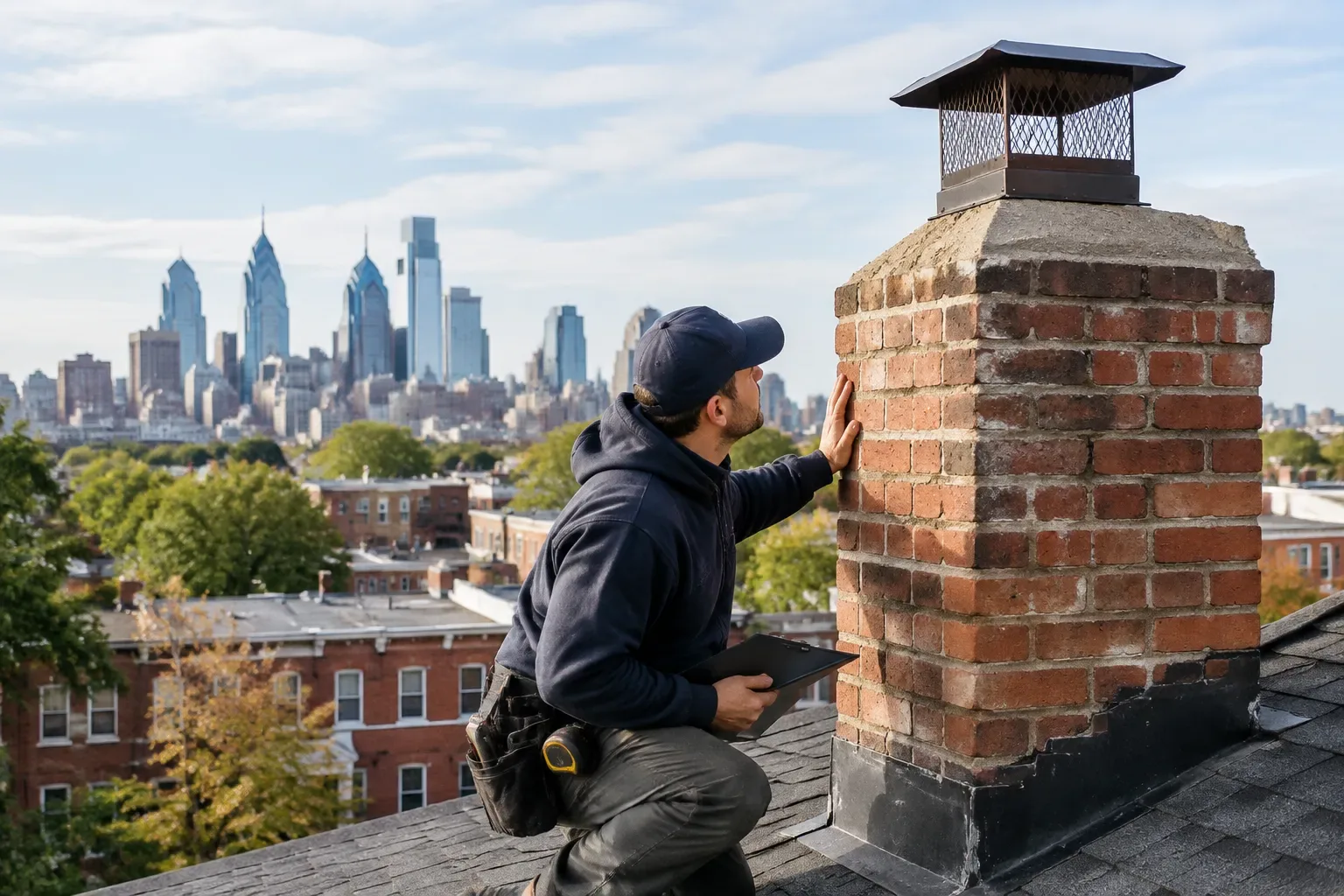
How Much Chimney Repair Is Needed Near Old York Rd?
The amount of chimney repair needed near Old York Rd can range from a small mortar-joint repair or cap replacement to partial rebuilding, liner work, or broader reconstruction. A street address, one exterior photo, or a crack seen from the yard cannot establish the correct scope. The reliable answer comes from identifying which component has failed, how far water or heat damage extends, and whether the chimney remains stable and safe to use.
For a Philadelphia property, start with a visual assessment and a focused inspection rather than assuming every issue calls for a rebuild. Tiptop maintenance can help readers move from a visible symptom to a clearer repair scope.
Quick Answer
Minor work may be enough when damage is limited to a few deteriorated mortar joints, a cracked crown surface, loose flashing, or a damaged cap. More extensive work may be needed when bricks are spalling, cracks run through masonry, sections are loose or leaning, water has reached interior areas, or the flue liner is compromised.
The practical question is not simply, “How bad does it look?” It is, “What is the source of the problem, which parts are affected, and does the chimney still safely contain combustion byproducts?” An inspection should separate cleaning needs from masonry, water-entry, and liner concerns before repairs are approved.
What determines the repair scope?
A chimney is a system, not just the visible stack above the roofline. The masonry, crown, cap, flashing, flue liner, firebox connection, and appliance venting path can each affect the scope of work. A problem in one area can also create damage elsewhere. For example, failed flashing may allow water behind the chimney, while a crown crack can let moisture enter from the top.
Philadelphia's freeze-thaw cycles can enlarge water-related damage. Water that enters porous brick, mortar, a crown, or flashing gaps can freeze and expand, reopening cracks and loosening material over repeated cycles. That does not mean every chimney needs major work, but it explains why a small untreated water-entry point can become a larger masonry repair.
An inspection should distinguish among:
- An observable symptom, such as flaking brick faces, staining, a draft change, or smoke entering a room.
- A possible cause, such as failed flashing, a deteriorated crown, blocked flue, worn mortar, or a liner issue.
- A professional finding, such as the actual depth of masonry deterioration, liner condition, or whether structural rebuilding is necessary.
Is it a small repair, component replacement, or rebuild?
The following repair levels give a useful way to discuss scope. They are not a diagnosis, and one level does not automatically lead to the next.
Maintenance or localized sealing
Appropriate only when the underlying masonry and water-management details are sound. Surface treatment should not be used to hide active cracks, failed joints, or an unresolved leak.
Repointing and isolated masonry repair
Deteriorated mortar can be removed and replaced when surrounding bricks remain stable. This is different from rebuilding, which is needed when the masonry itself has lost integrity.
Cap, crown, or flashing repair
A damaged roof-level component can admit water even when the chimney stack looks acceptable from the ground. The correct work depends on which component is allowing moisture in.
Partial rebuild
A limited section may need removal and reconstruction when bricks are loose, badly spalled, or fractured beyond localized repair. The remaining stable masonry may not need to be rebuilt.
Major reconstruction or liner work
Extensive structural movement, widespread masonry failure, or a confirmed flue-safety problem can require a broader project. This level should be based on inspection findings, not assumed from age alone.
Older Philadelphia housing may have weathered mortar, previous patching, deteriorated crowns, or older liner configurations. Those conditions make it especially important to inspect the actual affected components rather than treating cleaning and repair as the same service. For visible mortar loss or damaged brick, a Philadelphia chimney masonry repair assessment can help define whether repointing is enough.
Which visible signs need prompt attention?
Loose or falling masonry is a safety concern, not just a cosmetic defect. Stop using the fireplace or connected appliance and arrange prompt professional assessment if you notice loose bricks, a leaning stack, wide open cracks, smoke entering the home, suspected flue blockage, or signs that may follow a chimney fire.
Less urgent signs still deserve timely evaluation because water damage can progress between seasons. Watch for crumbling mortar, brick faces that peel or break away, rusted flashing, a cracked crown, a missing or loose cap, staining near the fireplace or upper floors, and unusual draft behavior.
Smoke in the room can have several possible causes, including flue blockage, draft conditions, appliance issues, or a problem outside the chimney system. It should not be treated as proof of one cause. Until the source is identified, avoid using the appliance. For serious active concerns, review the available 24/7 chimney emergency service information in Philadelphia.
What does an inspection check that a ground-level look cannot?
A sound assessment looks beyond the most obvious crack. The technician should evaluate exposed masonry, mortar joints, crown, cap, flashing, flue path, and the connection to the fireplace or heating appliance where applicable. The purpose is to identify both the visible defect and the condition behind it.
A chimney can appear intact from the sidewalk while still having concealed problems with the liner, upper flashing, interior masonry, or moisture pathways. Likewise, a stain indoors does not automatically prove that the chimney is leaking. Roof, wall, plumbing, or ventilation conditions may also need to be ruled out.
How can you prepare for a chimney repair inspection?
Clear information helps turn an inspection into a specific written scope rather than a vague recommendation. Note when you first noticed the issue, whether it worsens after rain or snow, whether the fireplace or appliance has been used recently, and whether prior repairs were performed.
- Photograph visible symptoms from a safe ground-level position, including staining, missing mortar, brick damage, cap problems, and areas where the chimney meets the roof.
- Write down changes in use, such as smoke entering the room, odors, draft changes, water after storms, or debris in the fireplace.
- Ask for an inspection that addresses masonry, crown, cap, flashing, and liner condition as relevant to the system.
- Request a written scope that names the observed defect, affected area, proposed repair method, access needs, materials, exclusions, and any recommended follow-up.
- Ask whether the proposed work corrects the water-entry source or only covers the visible damage.
If work changes chimney height, reconstructs substantial masonry, alters a liner, or affects a building system, approval requirements may differ from those for minor maintenance. Confirm current requirements with the City of Philadelphia and the professional evaluating the property rather than assuming one rule covers every scope.
Why cleaning does not solve structural damage
Chimney cleaning removes soot, creosote, debris, and certain blockages. It does not restore missing mortar, stabilize loose brick, close a crown crack, repair flashing, or correct a failed liner. Those are separate conditions that may be discovered before, during, or after cleaning.
Cleaning is still useful when a flue needs assessment or maintenance, but it should not be sold as a substitute for repair. Readers comparing upkeep costs can review this guide on what chimney cleaning may cost in Philadelphia, then request a separate repair scope if structural or water-entry defects are found.
Indoor dust or staining can also have more than one source. If the issue appears to be coming from HVAC registers rather than the fireplace area, it may be worth reviewing signs that air ducts need cleaning in Philadelphia. Air-duct cleaning does not repair chimney defects, and chimney repair does not correct an HVAC contamination issue.
When does repointing stop being enough?
Repointing replaces deteriorated mortar between otherwise stable bricks. It can be a sensible targeted repair where joints are worn but the masonry remains sound. It is not a fix for bricks that are deeply damaged, loose, cracked through, or part of a leaning or separating stack.
The common mistake is applying new mortar or surface coating over unstable masonry without addressing why it failed. That can leave water intrusion active behind the patch and delay necessary reconstruction. A proper evaluation should determine whether the brick, mortar, crown, flashing, and supporting areas are all still performing their jobs.
What should a chimney repair estimate include?
A useful estimate describes the actual scope in plain language. It should identify the observed condition, the affected chimney components, the proposed repair method, access requirements, material assumptions, and work that is specifically excluded. If the cause of moisture is uncertain, the document should also explain what is being investigated and what follow-up may be needed.
Avoid choosing a scope based only on a broad label such as “chimney repair.” Ask whether the plan is for repointing, crown repair, cap repair or replacement, flashing correction, partial rebuilding, liner evaluation, or another defined task. That clarity makes it easier to compare proposals and prevents a small repair from being mistaken for a full reconstruction.
What is the practical next step near Old York Rd?
Start with the smallest appropriate response, not the largest possible project. If you see minor mortar wear or a damaged cap but no safety symptoms, arrange an inspection before winter or before regular fireplace use. If there is active water entry, unstable masonry, smoke leakage, or a suspected flue problem, stop using the system until it is assessed.
The takeaway is simple: repair scope should follow the confirmed condition of each component and the source of the damage. A written inspection finding gives you a better basis for deciding between localized repair, component replacement, and reconstruction.
Ready to discuss your project?
Request a written chimney repair assessment near Old York Rd to clarify whether localized work or a larger scope is appropriate.
FAQ
How do I know if my chimney needs repair or just cleaning?
Cleaning addresses deposits and debris inside the flue, while repair addresses damaged parts such as mortar, bricks, crowns, caps, flashing, or liners. Crumbling joints, loose masonry, water staining, a damaged cap, or a cracked crown point toward a repair evaluation. A chimney can need both services, but neither should be assumed without checking the relevant areas.
Can a cracked chimney crown be repaired without rebuilding the stack?
Often, a crown issue may be addressed without rebuilding the full chimney if the surrounding masonry remains stable and the damage is limited to that component. A crown sits at the top and helps shed water away from the stack. The inspection should confirm whether cracks are superficial or whether water has already damaged brick and mortar below.
Are cracks in chimney mortar dangerous?
A small mortar crack is not automatically an emergency, but it can let water enter and worsen through freeze-thaw cycles. The concern rises when joints are crumbling, gaps are open, bricks are loose, or cracks continue through the bricks themselves. A professional should assess depth, location, and whether the chimney shows movement before deciding on repointing or more extensive work.
What if I see white residue on my chimney brick?
White residue may be efflorescence, which is mineral material left behind as moisture moves through masonry and evaporates. It is a clue that moisture may be present, not a diagnosis of the entry source. An inspection should look at the crown, cap, flashing, mortar, and nearby roof details to determine whether active water intrusion needs correction.
Can I use my fireplace if the chimney has water damage?
Do not assume it is safe based on appearance alone. Water damage can affect masonry, the flue, flashing, or nearby materials, and smoke or combustion gases must remain contained in the proper path. If there is loose masonry, unusual odors, smoke entering the room, suspected blockage, or visible deterioration, avoid use until the condition is evaluated.
Does every old Philadelphia chimney need to be rebuilt?
No. Age alone does not determine the correct repair. Some older chimneys need targeted repointing, a crown repair, cap work, flashing correction, or liner evaluation. Others may have extensive damage that calls for rebuilding. The deciding factors are the current stability of the masonry, the condition of individual components, water-entry history, and flue safety findings.
What should I ask before approving chimney repointing?
Ask which joints are deteriorated, whether bricks are stable, how failed mortar will be removed, what material is proposed for replacement, and whether a water-entry source is being corrected. Also ask whether the crown, cap, and flashing were inspected. Repointing can be appropriate, but it should not be used as a surface-only answer to broader masonry or moisture problems.
Why would a chimney liner need repair or replacement?
A flue liner helps contain heat, smoke, and combustion byproducts as they move out of the home. Damage, incorrect sizing, deterioration, or a condition found during inspection may require liner work. That conclusion cannot be made reliably from exterior bricks alone. The liner should be evaluated in relation to the fireplace or connected heating appliance and its actual venting path.