
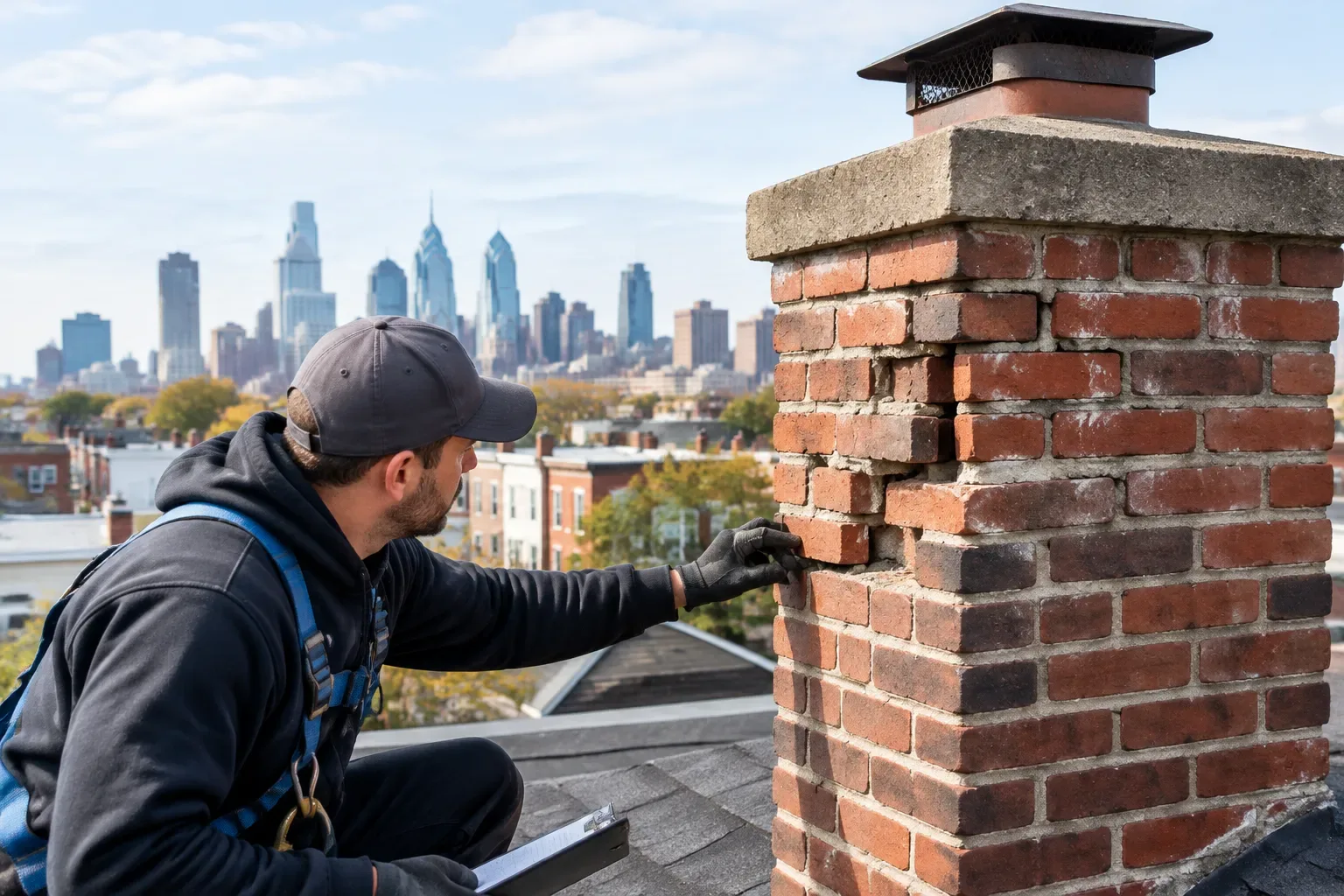
Is Chimney Cleaning Safe When Bricks Are Loose on N 5th St?
Usually, no. If bricks are visibly loose, displaced, bulging, or falling, routine chimney cleaning should pause until the chimney’s stability has been assessed. Brushes, rods, roof access, vibration, and debris removal can disturb weak masonry, while an unstable chimney can create hazards above the roofline and inside the home.
For a property near N 5th St, the address alone does not establish the condition of the chimney. A Tiptop maintenance assessment should distinguish minor surface mortar wear from movement in the chimney wall, an obstructed flue, or damage that needs masonry work before sweeping.
Quick Answer
Do not assume chimney cleaning is safe simply because the fireplace needs soot or creosote removed. Cleaning may proceed only after an inspection finds the accessible masonry, flue, and work area stable enough for service. If material is actively falling, the chimney leans, smoke enters the room, or a flue blockage is possible, stop using the fireplace or connected appliance and arrange an evaluation first.
Cleaning removes combustion deposits. It does not secure loose brick, rebuild failed mortar joints, repair a damaged liner, or correct structural movement.
Which visible masonry conditions should stop cleaning?
A small amount of weathered mortar does not automatically mean the entire chimney needs rebuilding. A loose brick or a shifting wall is a different concern. The key question is not how old the chimney looks, but whether any part of it can move, shed material, or interfere with safe flue operation.
Surface mortar wear
Recessed or sandy mortar can point to weathering, but it does not by itself prove that the chimney is unstable. An inspection can determine whether repointing is appropriate and whether sweeping can be performed safely.
Loose, cracked, or displaced brick
A brick that moves, has separated from surrounding mortar, or appears pushed out of line needs hands-on assessment. Cleaning is commonly deferred until the masonry is stabilized.
Falling material, a lean, or a bulge
These are higher-risk signs. Restrict access below the chimney, stop using the appliance, and seek prompt evaluation because falling debris can affect people, roofs, walkways, and nearby property.
Philadelphia’s freeze-thaw weather can worsen water-related masonry damage. Water that enters porous brick or deteriorated mortar can freeze, expand, and contribute to cracking, spalling, and loosening. Spalling means the brick face is breaking away, which can expose more absorbent material beneath it.
Can a chimney sweep make loose bricks fall?
It can. A competent provider should not treat visibly unstable masonry as a normal brush-only appointment. Ladder placement, roof movement, sweeping rods, vibration, and removal of accumulated debris can all add stress to material that is already detached or poorly supported.
That does not mean every chimney with worn mortar is unsafe to clean. It means the work sequence matters: assess condition first, address the hazards that prevent safe access or safe flue use, then clean when the system is suitable. A chimney inspection in Philadelphia is the useful starting point when the extent of movement or damage is unclear.
The NFPA 211 standard information identifies chimneys, fireplaces, vents, and solid-fuel appliances as systems that require safety-focused inspection and maintenance. For loose masonry, that system-level view matters because an exterior brick problem can coexist with a flue, crown, cap, or liner issue that is not visible from the ground.
What should happen before cleaning a damaged chimney?
The goal is to establish what is observed, what may be causing it, and what can actually be confirmed. For example, loose mortar is an observable symptom. Water entry, age-related deterioration, prior repairs, or structural movement are possible causes. The finding that a chimney wall is unstable, or that a liner is compromised, requires inspection.
- Stop using the fireplace or vented appliance if masonry is falling, the chimney appears to lean, smoke spills indoors, or the flue may be obstructed.
- From the ground, note the location of loose material, visible cracks, missing mortar, debris below the chimney, signs of water entry, and any recent changes in fireplace performance.
- Tell the inspector about the appliance type, fuel used, recent chimney use, past repairs, and whether the chimney is close to an adjoining roof, wall, sidewalk, or neighboring property.
- Request a clear scope that separates inspection, cleaning, masonry repair, crown or cap work, liner concerns, and any work that must wait until conditions are safe.
- Proceed with chimney cleaning in Philadelphia only after the provider determines that access and the chimney system are appropriate for the planned work.
Older masonry and attached housing can add complexity. Altered flues, previous repairs, weakened joints, and connections near adjoining structures may not be obvious in a quick exterior look. That is why a hands-on inspection and work-area assessment are more useful than assuming a visible defect belongs to only one portion of the chimney.
When is loose chimney masonry an urgent safety concern?
Treat the situation as urgent when bricks or mortar are actively falling, the stack appears to lean or bulge, pieces have landed near a walkway or adjacent roof, there is visible fire damage, or smoke and odors enter the living space during use. Do not rely on a fireplace screen, tarp, or a blocked damper as a substitute for evaluating unstable masonry.
In dense Philadelphia settings, falling material can put occupants, neighbors, roof workers, pedestrians, and property below at risk. Philadelphia’s unsafe buildings guidance provides local context for treating potentially dangerous building conditions seriously. For active falling material or another immediate chimney concern, review the available 24/7 chimney emergency services in Philadelphia and explain the visible conditions when requesting help.
Does loose mortar mean the chimney needs a full rebuild?
Not necessarily. Localized mortar deterioration may be addressed with targeted masonry repair, while widespread displacement, a severe lean, major brick loss, or damage affecting the chimney’s stability may require a broader recommendation. The inspection should explain the condition, the proposed repair area, and why that scope is appropriate.
A common mistake is treating every visible defect as cosmetic and scheduling only a sweep. The opposite mistake is assuming a few worn joints automatically require a full rebuild. A chimney masonry repair evaluation can separate repointing or limited brick replacement from more extensive work without presuming the largest repair is needed.
What should an inspection report tell you?
Ask for documentation that identifies where the issue is located and how it affects use or access. Photographs can help you compare the exterior condition over time and understand whether the concern is at the crown, upper stack, mortar joints, firebox, or another accessible area.
A useful report should address:
- The observed defect and its location
- Whether any masonry appears loose, displaced, or unsafe to work around
- Whether the flue, visible liner, firebox, crown, cap, and flashing show related concerns
- Whether the fireplace or appliance should remain out of use
- Whether cleaning is completed, deferred, or appropriate after a repair
- The recommended next service and why it is separate from cleaning
The Chimney Safety Institute of America explains why chimney professionals assess system condition, which is particularly relevant when a visible masonry issue may extend beyond what cleaning alone can resolve.
How can you plan the appointment safely?
Clear the area beneath the chimney of vehicles, outdoor furniture, and other items if debris is present. Let the provider know if the work area affects a shared driveway, a narrow side passage, an adjoining roof, or a sidewalk. Do not climb onto the roof to get closer photographs.
If the chimney is confirmed safe for cleaning, cost questions should be kept separate from repair questions. This guide to chimney cleaning costs in Philadelphia can help frame the cleaning conversation, but masonry stabilization, crown work, liner repairs, and other corrective work are separate scopes that need their own inspection findings.
What is the practical takeaway for a loose-brick chimney?
Pause fireplace use and routine sweeping when bricks appear loose or material is falling. The safest next move is an inspection that determines whether the concern is limited mortar wear, repairable localized damage, or an instability that must be addressed before anyone cleans or accesses the chimney.
Ready to discuss your project?
For a chimney near N 5th St with loose brick or falling mortar, request an inspection before scheduling routine cleaning.
FAQ
Is it safe to use a fireplace if a chimney brick is loose?
It is safer to stop using it until the condition is assessed, especially if the brick moves, material is falling, the chimney leans, or smoke enters the room. A loose exterior brick may be isolated, but it can also indicate deeper mortar deterioration or a problem affecting the flue. Continued use can add heat, draft, and combustion byproducts to a system whose condition has not been confirmed.
Can chimney sweeping fix loose mortar or bricks?
No. Sweeping removes soot, ash, and creosote from the flue and firebox areas. It does not restore mortar joints, reset brick, repair a crown, or stabilize a chimney wall. In some cases, cleaning must wait because the access and vibration involved could disturb weak masonry. Ask for the inspection and repair scope to be documented separately from the cleaning scope.
What is the difference between a cracked brick and a loose brick?
A cracked brick has a visible fracture, while a loose brick has lost enough support that it can move or has separated from surrounding masonry. Either condition deserves evaluation, but movement generally raises the concern level because it can lead to falling material. A crack does not always mean a brick is loose, and a loose brick may not have an obvious crack from the ground.
How do I know if debris came from the chimney or the roof?
Photograph the debris and its location from a safe distance, then look for changes in the chimney’s visible mortar, brick faces, crown, or cap without climbing. Pieces may also come from roofing, parapet walls, or other exterior components, so debris alone does not prove the chimney is the source. An inspection can identify the origin and whether it affects chimney use.
Should I cover or block off a damaged chimney myself?
Avoid improvised roof coverings, brick removal, or makeshift supports. They can create fall hazards, trap moisture, or dislodge more material. Restrict access below the affected area and avoid using the fireplace until a qualified professional can assess it. If a cap or crown issue is suspected, the inspection should determine the proper corrective work rather than relying on a temporary DIY fix.
Does a gas fireplace need the same caution with loose chimney bricks?
Yes. A gas appliance may produce less soot than a wood-burning fireplace, but it still depends on safe venting where a chimney serves that appliance. Loose masonry, a damaged flue, or an obstruction can affect safe operation regardless of fuel type. Do not assume a gas system is exempt from inspection because it looks cleaner inside.
Can loose chimney bricks affect a neighboring property?
They can, particularly where chimneys are close to adjoining roofs, narrow side spaces, walkways, or shared masonry conditions. A visible issue may not reveal the full boundary of the problem. Mention nearby structures and any debris landing areas when arranging an inspection so the work-area risk can be evaluated before cleaning or repair begins.
Should cleaning or masonry repair come first?
Masonry repair comes first when instability, falling debris, unsafe roof access, or a possible flue hazard is present. Cleaning can follow once the chimney is suitable for access and service. If the inspection finds only minor wear that does not compromise safe operation, the provider may be able to clean and recommend maintenance separately. The sequence should be based on documented conditions, not assumptions.