
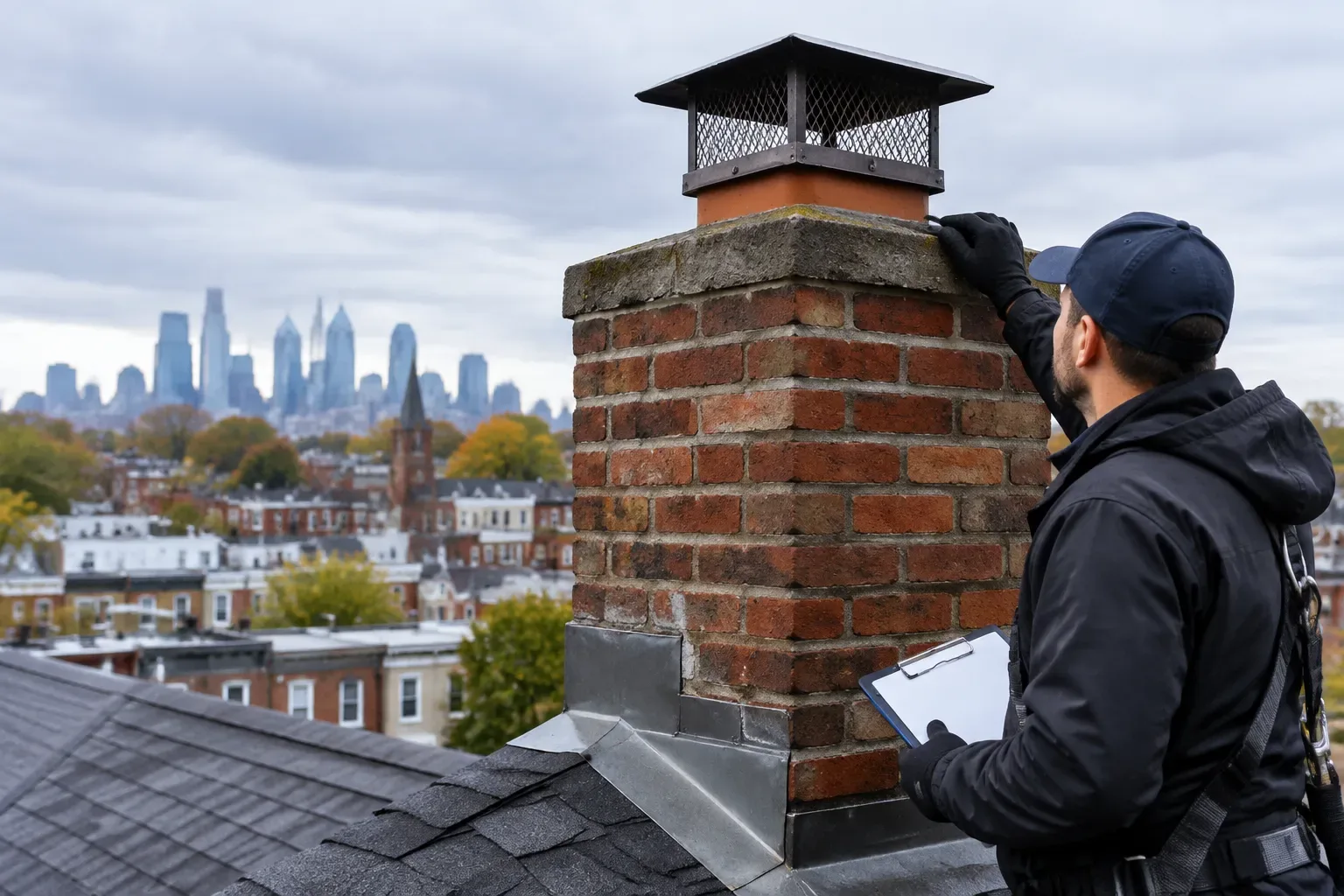
Why Does a Chimney Smell Worse After Rain on Ogontz Ave?
A chimney can smell worse after rain because moisture and humidity can reactivate odors already present in soot, creosote, damp masonry, or debris inside the flue. Rain can also expose a water-entry problem at the cap, crown, flashing, or brickwork. The smell alone cannot confirm which cause is present.
For homes near Ogontz Ave, the useful next step is to notice what the odor resembles, when it appears, and whether there are visible signs of moisture. Tiptop maintenance can help homeowners distinguish a cleaning need from a chimney or roof-related moisture issue.
Quick Answer
Rain does not create chimney odor from nothing. It usually makes an existing condition easier to smell because damp air reduces draft and moisture is absorbed by porous masonry and deposits in the flue. A smoky or tar-like smell can point to old soot or creosote, while an earthy, musty smell may indicate damp masonry, organic growth, or a moisture source elsewhere in the building.
If the odor returns after storms, appears with water in the firebox, or comes with staining, rust, crumbling mortar, or smoke entering the room, schedule an inspection rather than masking the smell with a deodorizer.
Why does rain make chimney odors stronger?
A working chimney relies on draft, the upward movement of warm air and combustion gases through the flue. During rainy or humid weather, particularly when no fire is running, that upward movement can be weak. Odors in the chimney can then move into the room more easily.
Moisture also affects the materials inside the system. Brick, mortar, soot, and creosote can hold moisture. Creosote is a combustible residue left by wood burning, and its smoky or sharp odor can become more noticeable when it is damp. This does not mean every post-rain odor proves dangerous creosote buildup, but it is a reason to consider inspection and cleaning.
Philadelphia's wet weather and winter freeze-thaw cycles can add another layer to the problem. Water can enter through a small crack or failed joint, then freezing and thawing may widen that opening over time. Older masonry chimneys can have weathered mortar, porous brick, aging flashing, or altered flue connections, so the right remedy depends on the actual water path.
What does the smell tell you about the likely cause?
Odor is an observable symptom, not a diagnosis. The descriptions below can help you document what you notice, but a professional finding requires inspection of the flue, firebox, cap, crown, flashing, masonry, and sometimes nearby roof areas.
| Odor you notice | Possible cause | What to check or do next |
|---|---|---|
| Smoky, sooty, or tar-like | Damp soot or creosote, weak draft, or deposits in the flue | Note whether it happens after rain or in humid weather; arrange cleaning and inspection if it persists. |
| Musty or earthy | Damp masonry, water intrusion, or organic contamination | Look for dampness, stains, rust, or crumbling mortar around the fireplace and chimney exterior. |
| Rotten, decaying, or animal-like | Wet debris, nesting material, or animal entry from an uncapped or damaged top | Have the top of the chimney and flue checked rather than trying to reach inside. |
| Chemical, fuel-like, or gas-like | A possible appliance, venting, or non-chimney issue | Stop using the fireplace or appliance and seek prompt evaluation. Do not assume the smell is normal. |
In attached or closely spaced homes, several roof penetrations, vents, and flues may be near one another. A smell that seems to come from the fireplace could instead be related to a roof leak, plumbing vent, damp basement, HVAC return, or another source outside chimney service scope.
Could a cap, crown, flashing, or masonry leak be letting rain in?
Yes, but each component handles water differently. A chimney cap sits over the flue opening and helps keep direct rain, leaves, and animals out. It cannot correct water entering through cracked masonry, damaged flashing where the chimney meets the roof, or a deteriorated crown.
The crown is the sloped top surface surrounding the flue. Its job is to direct water away from the chimney structure. Cracks, failed joints, and deteriorated mortar can create a route for water to reach the masonry or flue area. Flashing is the metal transition between roof and chimney, and a flashing leak can produce moisture symptoms that resemble a chimney leak.
A cap may be the appropriate fix when the inspection finds direct entry from above. If the finding is crown deterioration, flashing failure, open mortar joints, or damaged brick, cleaning alone will not stop recurring damp odors. Those cases may call for targeted chimney cap repair, crown work, masonry repair, or roof-related service as appropriate.
What can chimney cleaning solve, and what can it not solve?
Sweeping can remove soot, creosote, ash, and loose debris that contribute to a smoky post-rain odor. It is often useful after fireplace use, especially if the smell is tar-like and the flue has not been maintained. The EPA advises homeowners to have chimneys inspected and cleaned as part of safer wood-burning practices in its chimney inspection and cleaning guidance.
Cleaning does not repair a cracked crown, missing cap, failed flashing, damaged liner, or deteriorated brick. It also cannot correct every drafting issue. A proper assessment should separate deposits that can be removed from defects that need repair. For a closer look at cleaning-related timing and scope, see how much chimney cleaning can cost in Philadelphia.
Professional maintenance is particularly worthwhile when you cannot safely see the chimney top or identify the water path. The Chimney Safety Institute of America recommends hiring a chimney sweep for chimney maintenance guidance, and NFPA 211 provides standards context for chimneys, fireplaces, vents, and solid-fuel appliances through its NFPA 211 information page.
How can you narrow down the source before an inspection?
A few careful observations can make an inspection more efficient. Do not climb on the roof, dismantle the fireplace, or apply sealants inside the flue.
- Record when the odor appears: during rain, only after rain, during humid weather, or when the HVAC system operates.
- Describe the odor as smoky, musty, decaying, chemical, or gas-like, and note whether it becomes stronger with the damper open or closed.
- Look from indoors for water in the firebox, rusted metal, staining, peeling finishes, loose mortar, or dampness around the hearth.
- Photograph visible conditions after a storm, including exterior staining that can be seen safely from ground level.
- Keep the damper closed when the fireplace is not in use, unless the appliance manufacturer or a qualified professional has given different instructions.
- Schedule an inspection if the smell recurs, visible moisture appears, or the source remains unclear.
For a recurring odor without immediate danger signs, chimney cleaning in Philadelphia may be part of the solution if deposits are present. If the inspection identifies water entry or damaged components, repair should address that specific finding rather than treating cleaning as a catch-all answer.
When is a post-rain chimney smell a safety concern?
A mild musty odor after a storm is not automatically an emergency. Still, stop using the fireplace and seek prompt help if you notice smoke entering the room, suspected flue damage, a strong unexplained fuel or gas odor, a carbon-monoxide alarm activation, or signs of a chimney fire. Use working carbon-monoxide alarms near sleeping areas and follow the fireplace or appliance manufacturer's instructions.
Water in the firebox, loose masonry, or a visibly displaced cap also deserves timely assessment. If conditions suggest an immediate chimney-related hazard, consult 24/7 chimney emergency services in Philadelphia rather than lighting another fire to test the draft.
Could the smell be coming from air ducts or another part of the house?
It could. HVAC operation can pull odors from a basement, utility area, wall cavity, or fireplace zone and distribute them through the home. If the smell changes mainly when heating or cooling starts, or if it comes from multiple supply registers rather than the fireplace area, the source may not be the chimney.
That does not rule out a chimney issue. It simply means diagnosis should remain broad enough to avoid spending money on the wrong repair. Readers who are also noticing dusty, stale, or system-wide odors can explore air duct cleaning in Philadelphia and the related question of whether air duct cleaning is necessary.
The practical takeaway is simple: document the odor after the next rainfall, look for moisture evidence, and have the actual source confirmed before choosing cleaning, a cap, masonry work, or a non-chimney repair.
Ready to discuss your project?
If rain keeps bringing a chimney odor back to your Ogontz Ave home, request an inspection to identify the moisture path and the appropriate next step.
FAQ
Why does my fireplace smell musty when it rains?
A musty smell can occur when rain or humid air dampens masonry, ash, soot, or debris in and around the fireplace. It may also indicate water entering through the chimney top, crown, flashing, or nearby roof area. Because musty odors can also come from basements, wall cavities, or HVAC systems, an inspection should identify the moisture path rather than assuming the fireplace is the cause.
Can rain make creosote smell stronger?
Yes. Humidity and moisture can make existing creosote and soot odors more noticeable, especially when the fireplace is not drafting. Creosote is a wood-burning residue, so a smoky or tar-like smell after rain can be consistent with deposits in the flue. The smell alone cannot measure buildup or confirm a safety condition. Inspection and cleaning can determine whether deposits are present and whether another issue is contributing.
Does a chimney smell after rain mean it is leaking?
Not always. Rain-related odor can happen without a direct leak because damp air can intensify odors already present in the flue. A leak becomes more likely when there is water in the firebox, rust, damp walls, stains, peeling finishes, crumbling mortar, or repeat odor after every storm. Inspection should include the cap, crown, flashing, brickwork, and adjacent roof areas.
Should I keep the chimney damper open or closed to stop the smell?
For an unused fireplace, keeping the damper closed can reduce odor movement into the room, provided that choice follows the appliance manufacturer's instructions and the chimney is safe to operate. Do not block or seal a flue as a DIY solution. If odor persists with the damper closed, the underlying source may be deposits, moisture intrusion, poor draft, or a non-chimney condition.
Can a chimney cap stop a wet chimney smell?
A properly fitted cap can limit direct rain, leaves, and animals from entering through the flue opening. It helps when inspection confirms that water is entering from above. It will not repair a cracked crown, failed flashing, porous masonry, damaged liner, or a roof leak. The common mistake is replacing a cap without checking the other routes water can take into a chimney system.
Is it safe to use my fireplace if it smells after rain?
Do not use it if there is smoke entering the room, water in the firebox, suspected flue damage, a strong fuel or gas odor, carbon-monoxide alarm activity, or evidence of a chimney fire. For a mild recurring odor without those warning signs, arrange an inspection before regular use. A check can separate a cleaning need from moisture damage or a drafting issue that should be corrected first.
Why does the smell get worse when my heat or air conditioning runs?
HVAC airflow can change pressure in the house and draw air from the fireplace, chimney, basement, or wall cavities. It can also distribute an odor from a different source through multiple rooms. Note whether the smell starts at a supply register, the fireplace opening, or both. This pattern helps determine whether chimney evaluation, HVAC evaluation, or both are appropriate.
Do older Philadelphia homes have more post-rain chimney odor problems?
Older masonry can be more vulnerable to weathered mortar, porous brick, aging flashing, altered flue connections, and freeze-thaw damage. Those conditions can make moisture-related odors more likely, but no home should be diagnosed based on age alone. A newer property can also have a missing cap, roof leak, or drafting problem. The deciding factor is the condition found during inspection, not the building's age.