
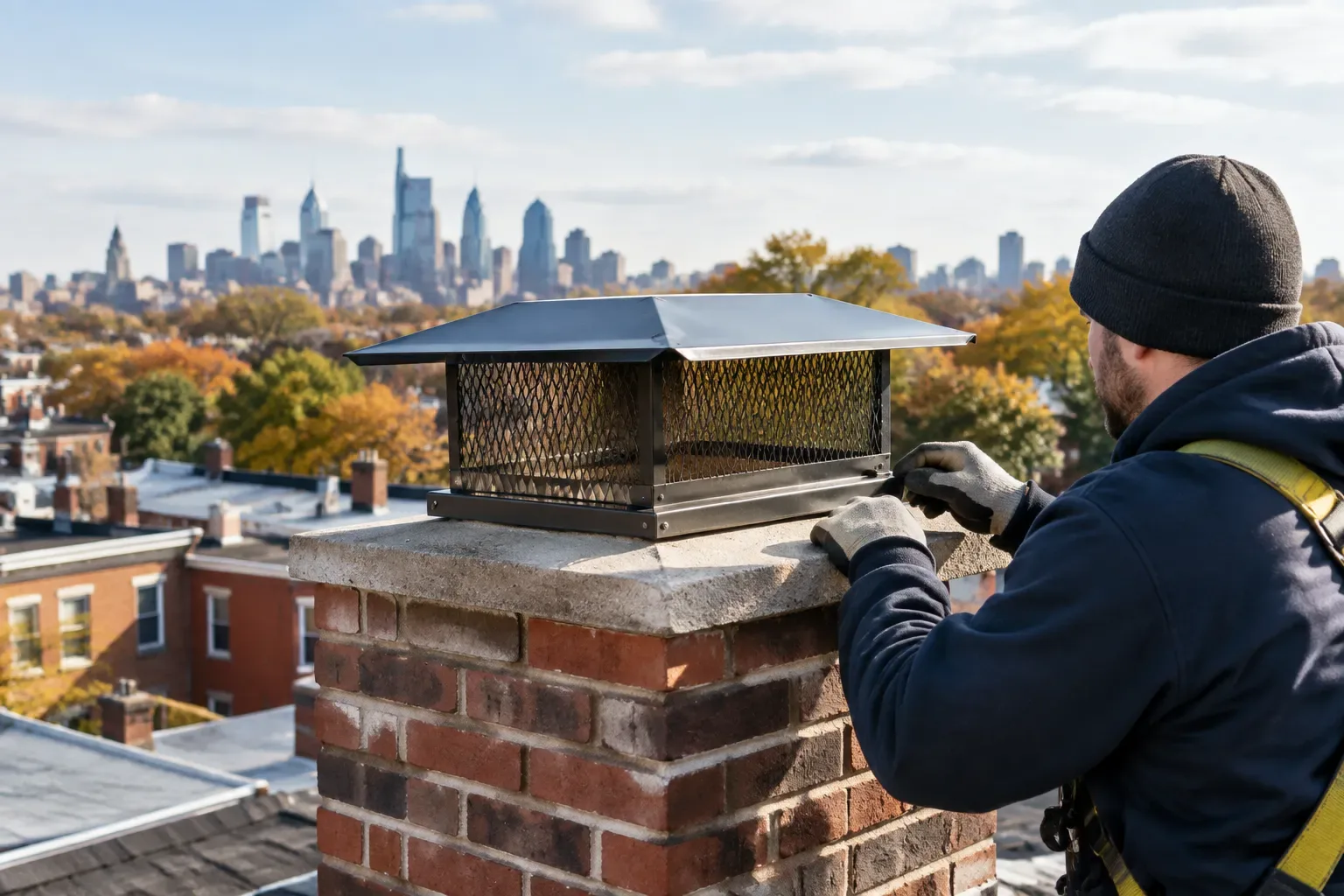
Do Oak Lane Chimneys Need Caps Before Winter?
Usually, yes: an intact, properly fitted chimney cap is a sensible pre-winter safeguard for an active chimney in Oak Lane. It can reduce direct rain and snow entry, help keep out leaves and animals, and protect the flue opening from windblown debris. But a cap is not a universal repair. It will not fix a cracked crown, failed flashing, damaged mortar, blocked flue, or draft problem.
The right answer depends on the chimney and appliance. Philadelphia homes can have masonry chimneys, factory-built systems, multiple flues, or closely spaced chimneys on attached homes. Before winter, inspect the entire termination area rather than adding a generic cap based on roof appearance alone.
Quick Answer
If the chimney has no cap, or the existing cap is rusted, loose, holed, bent, or missing its screen, arrange an inspection before using the fireplace or heating appliance for the season. A correctly selected cap can limit direct precipitation and animal entry, but it must preserve the clearances and venting requirements for that specific flue or appliance.
If there is smoke entering the room, a persistent odor, visible water staining, animal nesting, a known liner problem, or a past chimney fire, investigate the condition first. Installing a cap over a blocked or poorly venting system can make the real safety issue harder to spot.
What does a chimney cap protect against before winter?
A chimney cap sits over the flue opening. Its hood sheds precipitation away from the opening, while an appropriate screen can help limit entry by birds, squirrels, leaves, and other debris. That matters as winter rain, snow, and wind drive moisture toward the top of the chimney.
Water is especially hard on already-damaged masonry. Moisture that enters cracked mortar, a deteriorated crown, or an uncapped flue can freeze and expand during cold weather, worsening existing defects. A cap reduces direct entry, but it does not seal the whole chimney structure.
Is a missing or damaged cap the only reason a chimney leaks?
No. A cap is only one part of the chimney top and roof connection. Water indoors may come from several locations, and an exterior symptom does not prove which one is responsible.
Chimney cap
A cover installed above a flue opening. It helps reduce direct rain, snow, and debris entry while allowing the system to vent as designed.
Chimney crown
The sloped masonry or cement-like surface at the top of a masonry chimney. Cracks or poor drainage here can let water into the chimney structure even when a cap is present.
Chase cover
A metal cover used on many factory-built or wood-framed chimney chases. Rust, holes, or failed seams in this cover can create leaks that a flue cap cannot solve.
Flashing is another common concern. It is the material that seals the joint where the chimney meets the roof. A failed flashing joint can allow water into the home even with an excellent cap overhead.
Observable signs such as ceiling stains near the chimney, damp odors, loose wallpaper, or drips after wind-driven rain warrant evaluation. Possible causes include flashing, crown damage, masonry absorption, roof issues, or a failed chase cover. Only an inspection can identify the source, and some roof or interior moisture problems may fall outside chimney service scope.
How can you tell whether the cap needs replacement before winter?
A ground-level look with binoculars can identify obvious damage, but it cannot confirm flue clearance, attachment condition, or hidden deterioration. Do not climb onto the roof or lean a ladder against a chimney simply to inspect a cap.
Look for these visible warning signs:
- A cap that is missing, tilted, visibly loose, or sitting unevenly on the chimney.
- Rust, holes, cracked welds, bent mesh, or missing fasteners.
- Twigs, leaves, or nesting material collecting around the opening or screen.
- Water stains on interior walls or ceilings near the chimney after rain or snow.
- Cracked crown material, spalling brick, open mortar joints, or loose pieces near the top.
- Smoke entering the room, unusual odors, or poor draft when the appliance is used.
A cap that looks intact may still be the wrong size or style. This is particularly relevant where adjacent flues are close together or a chimney serves a factory-built fireplace, gas appliance, oil appliance, or wood-burning system.
When should an inspection come before cap installation?
Put inspection first if the system has symptoms that affect venting or suggest a blockage. The National Fire Protection Association advises regular maintenance and inspection of chimneys and heating systems because blocked or poorly maintained systems can create fire and carbon-monoxide hazards.
Inspection is the more careful next step when you have:
- Smoke or exhaust entering living space.
- A suspected animal nest, debris blockage, or heavy screen buildup.
- A damaged liner, history of chimney fire, or signs of flue deterioration.
- Loose bricks, missing mortar, a cracked crown, or leaking roof flashing.
- A factory-built chimney or direct-vent appliance with a manufacturer-specific termination.
A cap should never cover, reduce, or alter an active flue opening or listed vent termination without confirming the appliance and chimney requirements. The most common mistake is treating every top opening as if it accepts the same off-the-shelf rain cap. That can compromise draft or conflict with the system design.
What should be checked on an Oak Lane chimney before winter?
Focus on the chimney as a weather-exposed system, not just the cap. Older Philadelphia housing may have aging masonry, prior roof work, fireplace alterations, or closely positioned chimneys. None of those conditions can be assumed at a particular property, but they are good reasons to assess the full assembly.
- From the ground, look for a missing, leaning, corroded, or debris-covered cap and note any visible crown or masonry damage.
- Inside, check the fireplace or appliance area for odors, fallen debris, moisture staining, smoke issues, or evidence of animal activity.
- Avoid using an appliance that has active draft, blockage, or smoke problems until it has been evaluated.
- Have the cap, flue, liner symptoms, crown, flashing, mortar joints, and chimney attachment examined together before winter use.
- Ask for the proposed cap's dimensions, attachment method, flue clearance, and any observed masonry or flashing defects to be documented.
Routine chimney cleaning and inspection are separate from cap replacement, though the appointments can inform each other. If you are seeing soot, odors, poor fireplace performance, or other warning signs, review these signs a Philadelphia chimney needs cleaning or attention before the heating season.
Does every chimney use the same kind of cap?
No. The cap or termination must suit the chimney construction and fuel-burning equipment. A masonry flue may use a cap mounted to a tile flue or chimney top, while a factory-built chimney often requires a listed termination made for that system. Gas and oil appliances can also have specific venting requirements that differ from a wood-burning fireplace.
A multi-flue chimney may need a solution that protects each opening without interfering with exhaust paths. On attached homes, nearby chimneys and rooflines can affect access and wind exposure, but they do not automatically call for a particular cap design. Measurements and inspection determine the appropriate fit.
Material choice also should follow the installation conditions rather than appearance alone. Ask the person evaluating the work to explain the compatibility of the cap, screen, fasteners, chimney top, and appliance requirements. A lower-cost generic cover is not a good substitute if it does not fit securely or maintain proper venting.
Can a cap solve animal problems, water stains, and draft issues?
It can help with some of those concerns, but it is not a catch-all solution.
| What you notice | A cap may help when… | What still needs checking |
|---|---|---|
| Birds, squirrels, or leaves near the flue | The flue is otherwise clear and a suitable screen can be used without restricting venting | Existing nests, blockage, soot buildup, and screen clearance |
| Water stains near the chimney | Direct precipitation is entering an uncapped flue | Crown cracks, flashing, roof leaks, masonry condition, and chase-cover seams |
| A loose or rattling top cover | The cap itself has failed or lost fasteners | Masonry anchors, chimney top damage, and safe roof access |
| Smoke or weak draft | Rarely, if a damaged or blocked screen is contributing | Flue blockage, liner condition, damper position, appliance operation, and termination requirements |
For older chimneys, a broader maintenance check is often more useful than replacing one visible part. Learn more about older-home chimney maintenance if age-related wear or past modifications are a concern.
What is the practical takeaway before winter?
Do not wait for a leak, nest, or draft problem to discover that the chimney top is exposed. If the cap is missing or visibly damaged, have the chimney top and flue evaluated before seasonal use. If the cap is sound and there are no symptoms, keep monitoring it and include it in regular chimney maintenance.
For an Oak Lane property, the useful question is not simply, “Do I need a cap?” It is, “Is this cap correctly fitted, clear, secure, and paired with a sound crown, flashing, and flue?” That check gives a more reliable basis for winter preparation.
Ready to discuss your project?
For an Oak Lane chimney-top check before winter, reach out to Tiptop maintenance.
FAQ
Do I need a chimney cap if I do not use my fireplace?
Usually, an unused masonry chimney can still benefit from protection against rain, snow, leaves, and animals. However, an unused fireplace may share a structure with another active appliance, have a sealed or altered flue, or require a specific closure method. Do not assume the opening can be covered in any manner. Have the chimney configuration identified before installing a cap.
Can rain get into a chimney even with a cap installed?
Yes. A correctly fitted cap reduces direct precipitation entering through the flue opening, but wind-driven moisture can still affect the chimney exterior. Water may also enter through a cracked crown, open mortar joints, failed flashing, roof defects, or a damaged chase cover. Water staining should be evaluated as a source-tracing issue, not blamed on the cap automatically.
Is a chimney crown the same as a chimney cap?
No. A cap covers the flue opening and may include a screen. A crown is the sloped top surface of a masonry chimney around the flue. Both are intended to manage water, but they fail differently and require different repairs. A chimney can have a sound cap and still leak through a cracked or poorly draining crown.
Can I put a cap on a gas fireplace chimney?
Only if the cap or termination is compatible with that specific gas system. Many gas fireplaces and appliances use manufacturer-designed vent terminations, and modifying or covering them with a generic cap can interfere with proper venting. Confirm the appliance model, vent type, and installation requirements before changing anything at the top of the chimney.
Why is my chimney cap making noise in the wind?
Rattling can indicate loose fasteners, corroded metal, a warped lid, or an attachment issue at the chimney top. Wind may make the symptom more noticeable, but the exact cause requires inspection. Avoid trying to secure a cap from a ladder if roof access is unsafe, especially if the cap is near damaged masonry or multiple flues.
Will a chimney cap stop squirrels or birds from getting inside?
A properly fitted screened cap can reduce access, but it will not remove animals or nesting material already in the flue. The screen must remain clear and must not conflict with the venting design. If you hear movement, see nesting material, or suspect blockage, arrange an inspection before using the fireplace or connected appliance.
Should I clean the chimney before replacing a damaged cap?
Cleaning and cap evaluation often make sense together, especially if debris, soot, animal activity, or restricted airflow is suspected. The sequence depends on the condition found. A professional may need to assess the flue first, remove a blockage or buildup if present, and then confirm that the new cap will not restrict the system.
How do I know if my chimney problem is actually a roof leak?
The location and timing of staining can offer clues, but they do not prove the source. Moisture near a chimney can come from flashing, roof covering, crown cracks, masonry absorption, a chase cover, or an uncapped flue. A chimney inspection can identify chimney-related defects; if those are not present, a roofing or interior moisture assessment may be needed.